Full Signal Chain Test
We meter signal strength and quality at the LNB, the wall plate and the decoder input. This tells us exactly where the signal is being lost, so you pay for the real fault rather than a guessed replacement.
DStv Signal Loss E48-32 Repair in Western Cape is what we do every day: we trace the fault from dish to decoder and get your picture back. If your screen is stuck on E48-32, the dish has moved, the LNB has failed or the RG6 cable has water in it. We carry meters, spare LNBs and F-connectors on every van, so most Cape homes are watching again within the same visit.
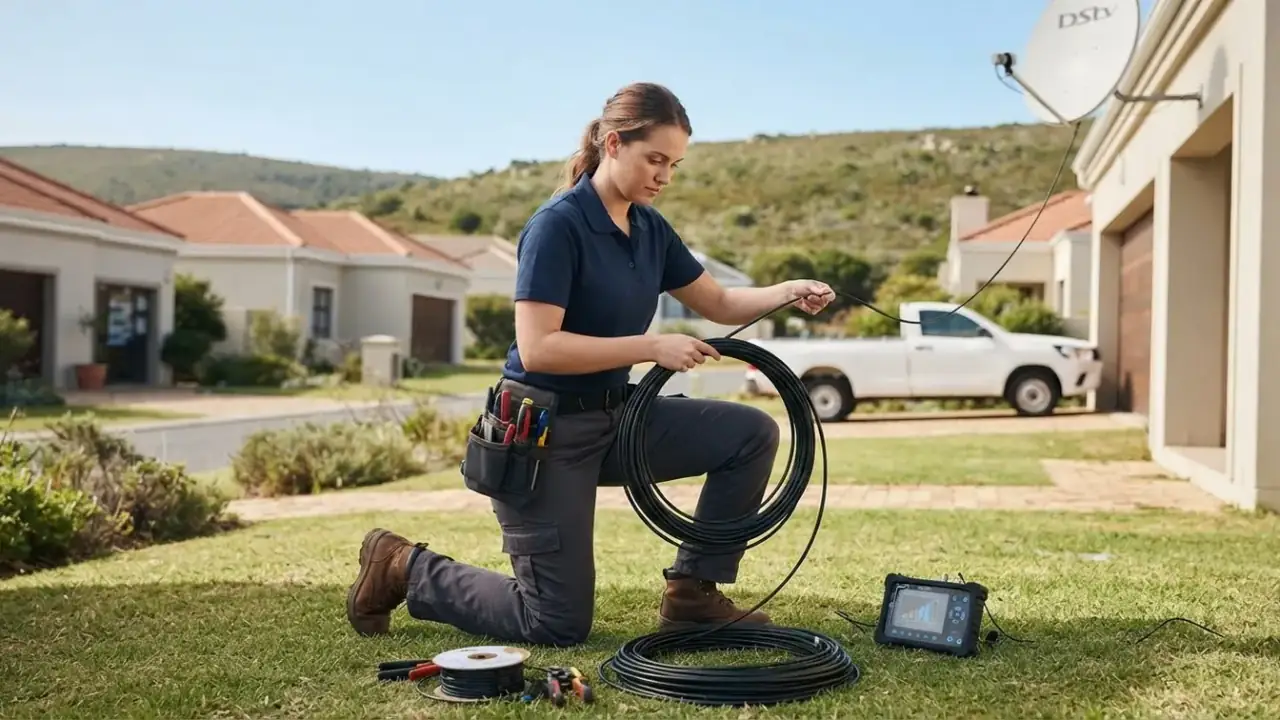
DStv Signal Loss E48-32 Repair in Western Cape is fault-finding work: error E48-32 means your decoder is receiving no usable signal from the dish, so we test the whole chain rather than guessing. A satellite signal meter goes on the LNB output first to read signal strength and quality. If those numbers are low or jumping, the problem sits outside. If they are strong, the fault is in the cable run, the wall plate or the decoder tuner itself. We check dish alignment with a compass and inclinometer, inspect every F-connector for corrosion, and confirm the decoder is set to the correct satellite and port before we touch anything else.
Cape Town's south-easter and winter north-westerly fronts are the two biggest causes of E48-32 error fix callouts in Western Cape. A dish bracketed on a west-facing wall in Camps Bay or Blouberg takes the full force of the wind, and a 3 to 5 degree shift is enough to drop you off the satellite. Salt air along the Atlantic Seaboard eats F-connectors and LNB housings, while older RG6 coaxial cable in Gardens and Plumstead cracks and lets in moisture. If you have been searching for DStv Signal Loss E48-32 Repair near me in Western Cape, that combination of wind, salt and ageing cable is usually what we find on site.
Every E48-32 callout includes a full signal diagnosis, not just a quick look at the dish. Here is what is covered in the standard repair, and what we quote separately if the fault turns out to be bigger than expected.
We meter signal strength and quality at the LNB, the wall plate and the decoder input. This tells us exactly where the signal is being lost, so you pay for the real fault rather than a guessed replacement.
If the dish has shifted, we re-align it using a compass and inclinometer and fine-tune on the meter. We also check bracket tightness and replace rusted fasteners so the alignment holds through the next windy season.
Failed LNBs and corroded F-connectors are replaced on site from van stock. We use SABS approved components and crimp every connector properly with a coaxial crimping tool, then seal it against moisture.
Damaged or waterlogged RG6 coaxial cable is cut back and re-terminated, or replaced along the affected run. Cable clips and wall brackets are re-secured so the run does not chafe or flap in the wind.
Once signal is restored, we confirm the decoder locks onto all channels and test the HDMI feed to your TV. You see the signal strength reading on screen before we leave, so you know the fix is real.
Dish re-alignment, LNB replacement and cable repairs carry a workmanship warranty. If the same fault returns within the warranty period, we come back and sort it without charging you another call-out.
You call or WhatsApp 066 443 8385 and tell us what is on screen. If it is E48-32, we ask three quick questions: is it on all channels, did it start after wind or rain, and is there a second decoder in the house. That tells us whether to load a ladder, a replacement LNB or a full cable kit before we leave.
The technician connects a satellite signal meter at the LNB and reads strength and quality. Strong readings point to cable or decoder; weak readings point to the dish. This five-minute test saves you money because we repair the actual fault instead of replacing everything.
We check the dish for movement, rust and bracket flex, then test the LNB. A failed LNB is the single most common cause of E48-32 after a storm. If it has failed, we fit a new Hirschmann or Ellies unit and re-peak the dish on the meter, not by eye.
We strip back suspect RG6 coaxial cable with a proper cable stripper, cut off corroded ends and crimp new F-connectors. Any cable run showing water ingress or a crushed section gets replaced. Cable clips and wall brackets are re-secured so the run does not flap in the wind.
With signal restored, we confirm the decoder locks onto all channels, run a quick HDMI tester on the TV feed, and show you the signal strength reading on screen. You get a short explanation of what failed and a workmanship warranty on the repair before we pack up.
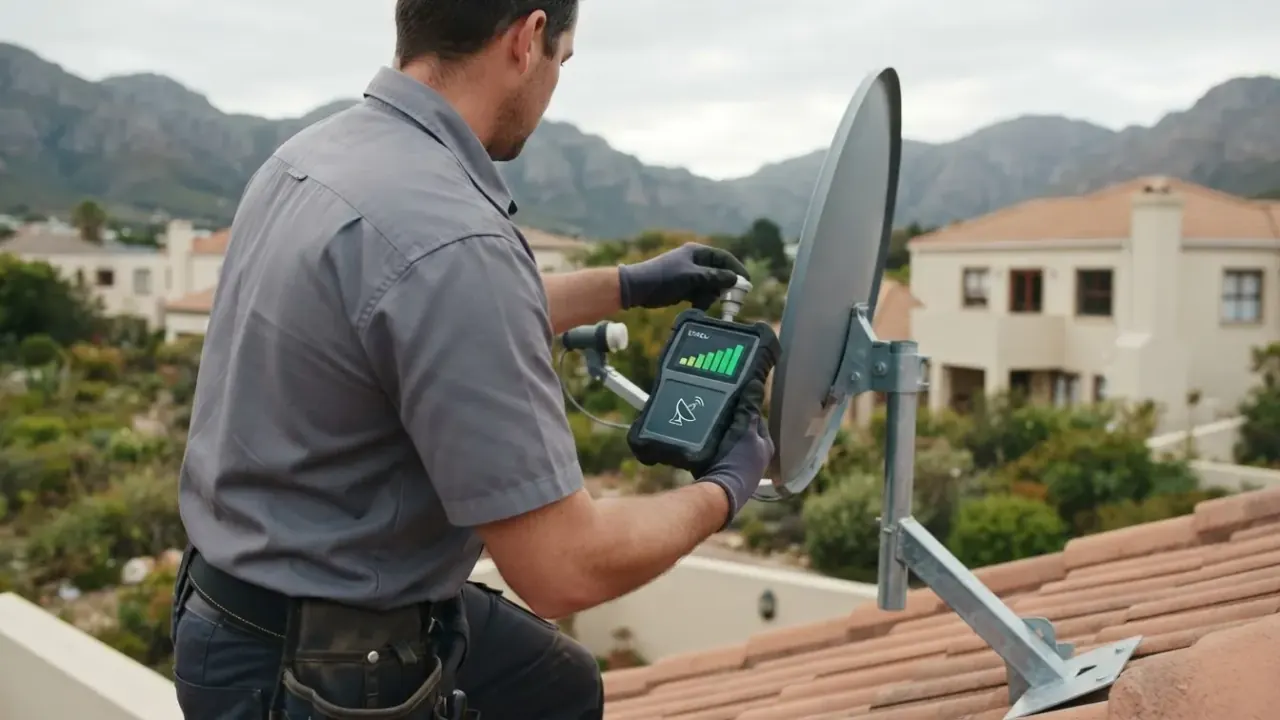
You call or WhatsApp 066 443 8385 and tell us what is on screen. If it is E48-32, we ask three quick questions: is it on all channels, did it start after wind or rain, and is there a second decoder in the house. That tells us whether to load a ladder, a replacement LNB or a full cable kit before we leave.
Reads signal strength and quality at the LNB and wall plate, which is how we tell a dish fault from a cable or decoder fault in minutes rather than by trial and error.
Sets the dish azimuth and elevation correctly before fine-tuning on the meter, so alignment is repeatable and does not rely on guesswork or a phone app.
Prepares coaxial cable to the correct dimensions and crimps F-connectors properly. Poorly crimped connectors are one of the most common causes of recurring signal loss.
Checks decoder power supply and voltage at the LNB input, which helps confirm whether a fault is electrical rather than signal-related.
Verifies the TV feed after repair so we know the picture problem is solved end to end, not just at the decoder output.
Cape roofs are steep, tiled and often wet. Proper access equipment means the work gets done safely and the technician is not rushing the alignment.
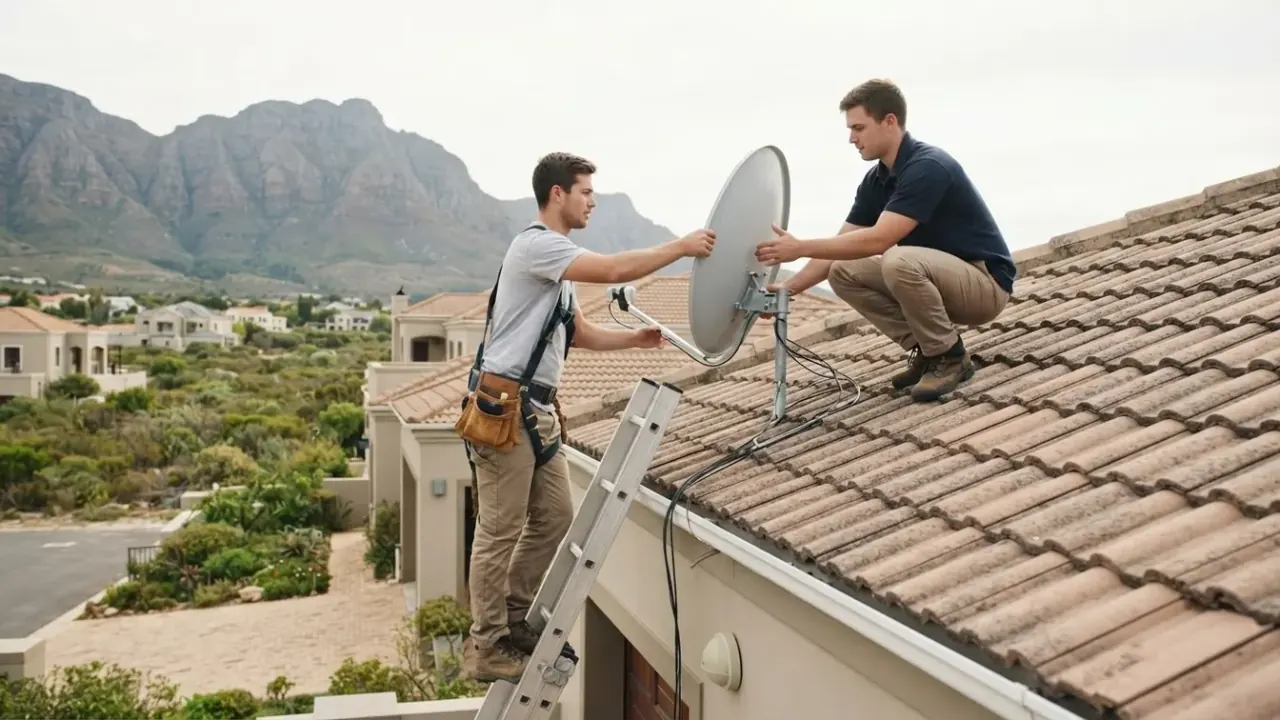
A family in Blouberg had been without DStv for four days after a south-easter, with E48-32 on every channel. A previous installer had told them the dish needed full replacement because the bracket looked worn.
After: We metered the signal, confirmed the LNB was healthy, and found the dish had shifted about 4 degrees. Re-peaked on the meter, replaced two rusted bolts, and the picture was back in 50 minutes for a fraction of the replacement quote.
Book this service →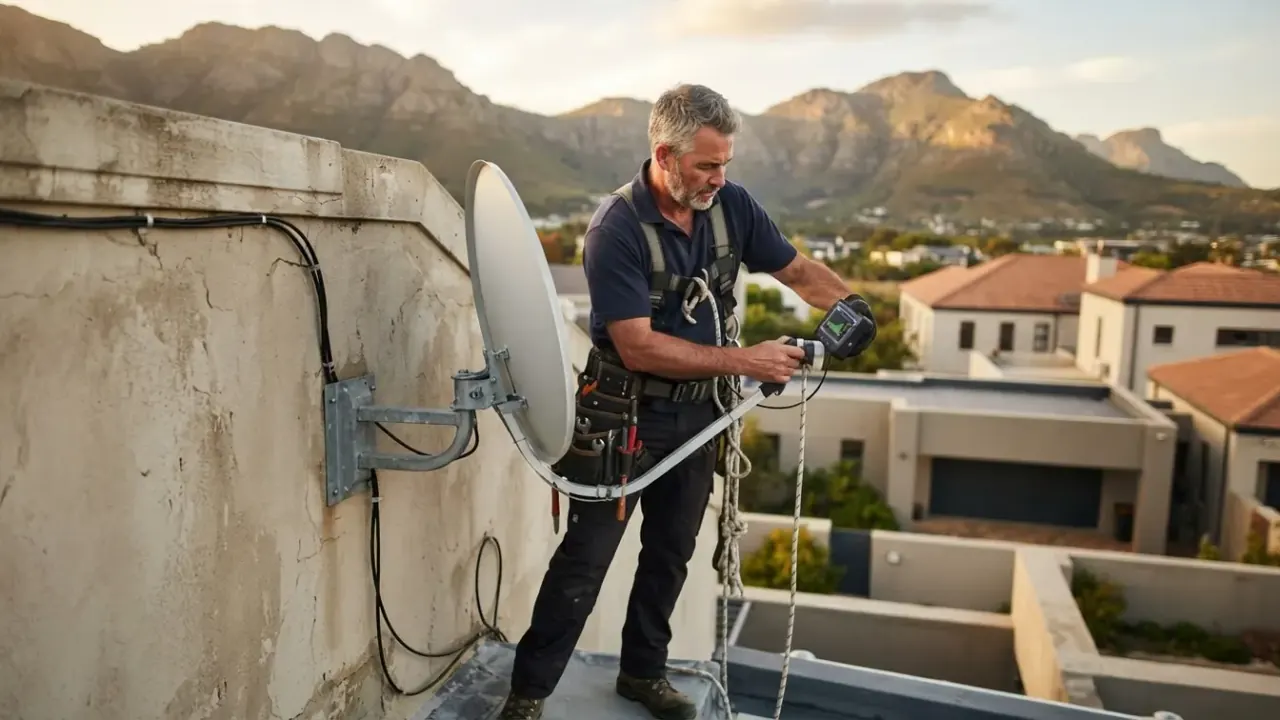
A Plumstead homeowner had intermittent E48-32 that only appeared during rain and cleared within a few hours. Two previous visits had replaced the decoder settings and reset the LNB, with no lasting fix.
After: We cut back the coaxial cable at the wall entry point and found green corrosion inside the copper braid. Replaced a 6-metre section of RG6, fitted new sealed F-connectors, and the signal held through the next three winter storms.
Book this service →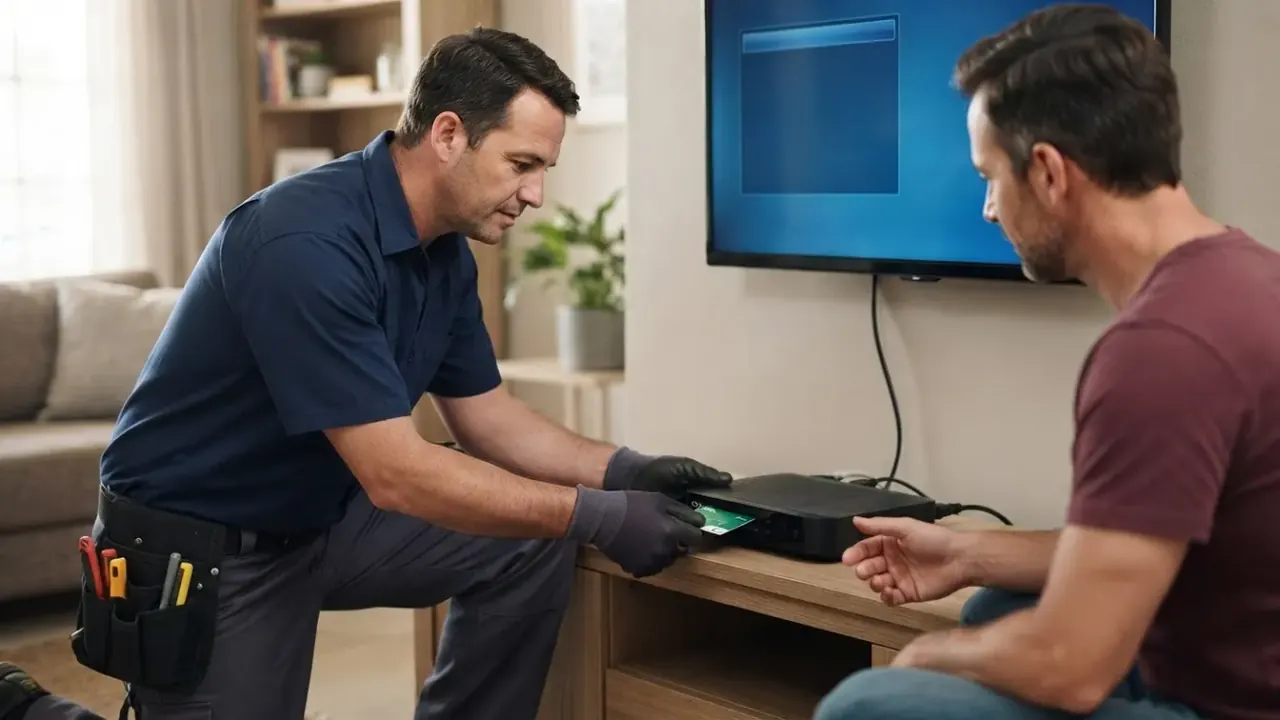
Eleven units in a Sea Point apartment block lost signal on the same morning, all showing E48-32. The body corporate had booked three separate installer visits with no resolution.
After: We tested at the communal distribution point and found a corroded splitter input and a water-damaged cable end. Replaced both, re-clipped the run, and all eleven units were back on air within two hours of arrival.
Book this service →E48-32 rarely appears on its own. Most customers call us with one symptom and we find two or three contributing faults on the same system. Here are the problems we fix most often across the Cape.
Ask a pro →We re-peak the dish on a signal meter, replace rusted or undersized fasteners, and torque the bracket properly. If the mounting point itself is flexing, we relocate the dish to a more sheltered position on the property.
We test the LNB output with a satellite signal meter, fit a replacement Hirschmann or Ellies unit from van stock, and re-align the dish to suit the new LNB. Most replacements are done within 30 minutes.
We cut back the cable to dry copper, fit new F-connectors, and replace any run showing heavy ingress. Connectors are sealed against future moisture so the same fault does not return next winter.
We replace corroded F-connectors with properly crimped, sealed units and inspect the full run for other salt damage. Coastal properties often benefit from a periodic connector check before winter.
“Our DStv died on the Friday of a big rugby weekend, stuck on E48-32. The technician arrived Saturday morning, metered the signal, found the LNB had failed after the south-easter, and had a new one fitted and the dish re-peaked in under an hour. Picture was back before kick-off and the price matched the quote exactly.”
Riaan M.Homeowner, Blouberg
✓ Verified“Three units in our block lost signal on the same day, all showing E48-32. They traced it to a corroded connector at the communal distribution point, replaced the cable end and re-clipped the run. They also labelled the headend properly, which no previous installer had bothered to do. Clean, quick and well documented.”
Fatima D.Body Corporate Trustee, Sea Point
✓ Verified“I had two other installers tell me I needed a whole new dish. These guys metered everything first and showed me the readings. Turned out to be water in the coaxial cable and a bad F-connector. Fixed for a fraction of the replacement quote, and it has held through two winter storms since.”
Johan V.Homeowner, Somerset West
✓ VerifiedMost E48-32 repairs in the Western Cape land between R450 and R1,800 including the call-out, depending on what has failed. A connector or cable-end repair sits at the bottom of that range; a new LNB plus dish re-alignment sits near the top. If the dish needs a full re-mount with new brackets, expect a separate quote before we start. We confirm the call-out fee on the phone, so there is no surprise on the invoice.
Error E48-32 means the decoder is getting no usable signal, and in the Cape the usual causes are wind-shifted dishes, failed LNBs, water in the coaxial cable, or corroded F-connectors. Salt air along the Atlantic Seaboard accelerates connector corrosion, while the south-easter and winter north-westerly fronts move dishes that were not properly bracketed. Occasionally the fault is inside the decoder tuner itself, which is why we meter the signal before quoting any repair.
We do, across the Cape metro and surrounding towns, seven days a week. Call or WhatsApp 066 443 8385 with your suburb and what is on screen, and we will book a two-hour arrival window. Our technicians are MultiChoice accredited installers carrying satellite signal meters, spare LNBs and RG6 cable, so the majority of E48-32 faults are resolved on the first visit without a follow-up appointment.
You can try three safe checks: confirm the decoder is switched on and not in standby, check that the cable is firmly seated at the wall plate, and power-cycle the decoder for 60 seconds. If the error returns, stop there. Climbing onto a wet Cape roof to nudge a dish usually makes alignment worse, and without a signal meter you are guessing. That is the point where a professional call-out is cheaper than a new dish.
Our technicians cover the Western Cape from the Atlantic Seaboard through the Southern and Northern Suburbs, out to the Winelands and the West Coast. Wherever you are, the same meter-first diagnosis and upfront pricing applies. Here are some of the areas where we handle DStv E48-32 repair Western Cape customers rely on most.
Dishes in Arbeidslus sit on exposed rooflines that take wind loading, so we check bracket torque as well as alignment on every E48-32 callout here.
↗ 02 BergvlietOlder Bergvliet homes often have original coaxial cable runs. We test the full run, not just the ends, when signal is marginal or intermittent.
↗ 03 BloubergBlouberg's south-easter is hard on dishes. We re-peak on a signal meter and replace rusted fasteners so alignment survives the next windy spell.
↗ 04 Camps BaySalt air in Camps Bay corrodes connectors quickly. We replace and seal every F-connector on coastal callouts, not just the one that failed.
↗ 05 CliftonClifton properties often have complex cable routing and multiple decoders. We test each leg separately to isolate the fault without disturbing working points.
↗ 06 Da Gama VillageDa Gama Village homes frequently need LNB replacement after storms. We carry Hirschmann and Ellies units on the van for same-visit repairs.
↗ 07 DennesigIn Dennesig we handle both single-home E48-32 faults and shared systems, tracing signal loss to the correct distribution point before quoting.
↗ 08 Dominique EstateEstate properties in Dominique Estate often have communal headends. We test at the distribution point first to isolate the fault quickly.
↗ 09 FancourtFancourt's larger properties mean longer cable runs and more splitters. We meter each section so a weak leg is not misdiagnosed as a dish fault.
↗ 10 GardensGardens' older housing stock and dense tree cover both affect signal. We check line of sight as well as alignment when diagnosing E48-32.
↗ 11 Helderberg VillageHelderberg Village sits in a wind-exposed position. We re-align dishes on the meter and confirm the bracket is holding before we leave.
↗ 12 JamestownJamestown callouts often involve ageing installations. We audit the full system and replace only the components that have actually failed.
↗ 13 KensingtonKensington homes with multiple viewing points get a leg-by-leg signal test, so a splitter fault is not mistaken for a dish problem.
↗ 14 KrigevilleKrigeville's tree cover can gradually block satellite line of sight. We check for growth as well as alignment on every signal loss callout.
↗ 15 Laguna SandsLaguna Sands properties near the coast see faster connector corrosion. We fit sealed connectors and inspect the run for salt damage.
↗Stuck on E48-32 with no picture? Call 066 443 8385 and we will book you a two-hour arrival window, often the same day. Upfront call-out pricing, MultiChoice accredited installers, and a workmanship warranty on every repair we carry out.
Book a Repair 066 443 8385 →Call or WhatsApp 066 443 8385 and tell us the suburb, the error code and how many TVs you need. We answer seven days a week from 08:00, with 24/7 emergency call-outs for signal loss. Most Western Cape jobs are booked same-day or next-day, and you get a price before we dispatch a van.