Residential DStv Installation in Saamstaan
Most of our Saamstaan work is residential: freestanding homes, townhouses and rental units where a family wants a picture that holds through the wind and rain. The priorities are usually the same, a stable signal, neat cable routing, and a setup that does not need a technician back every few months. We handle single-decoder installs, dual and triple view upgrades, and the fault repairs that follow when weather knocks a setup out. If you are moving into a Saamstaan property and the previous owner left a dish on the roof, we can test whether it is worth keeping or better replaced.
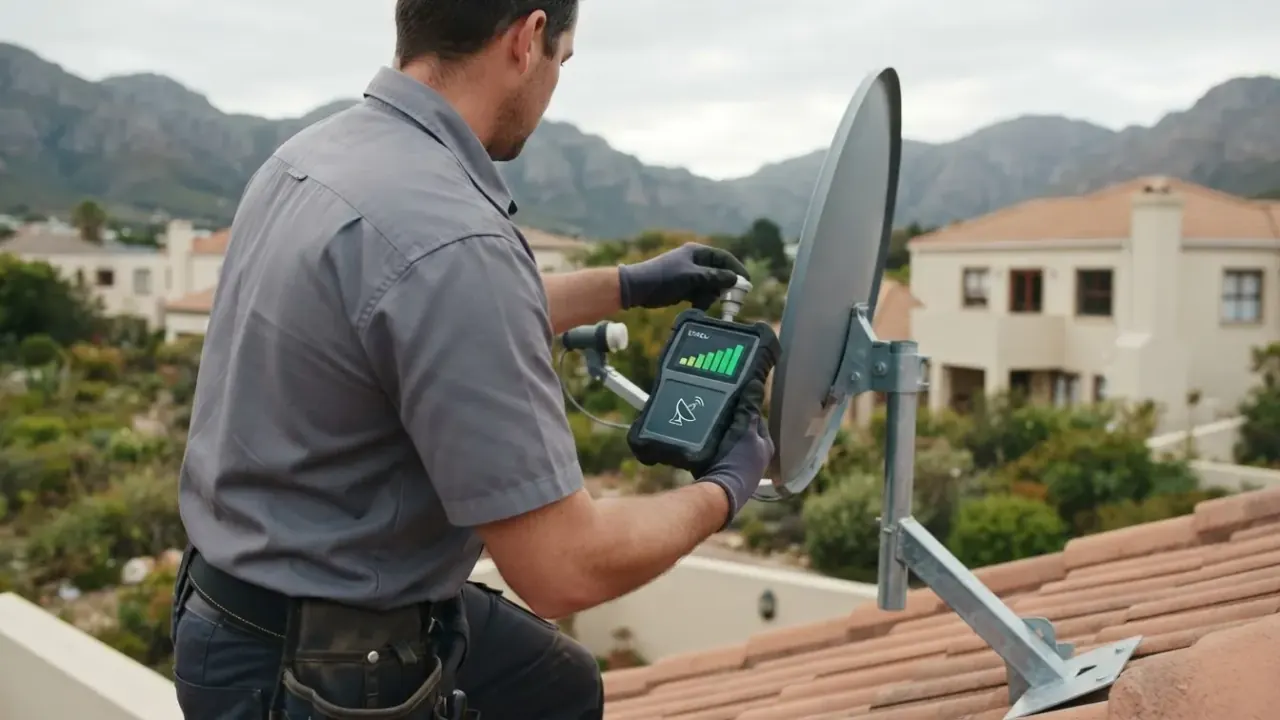
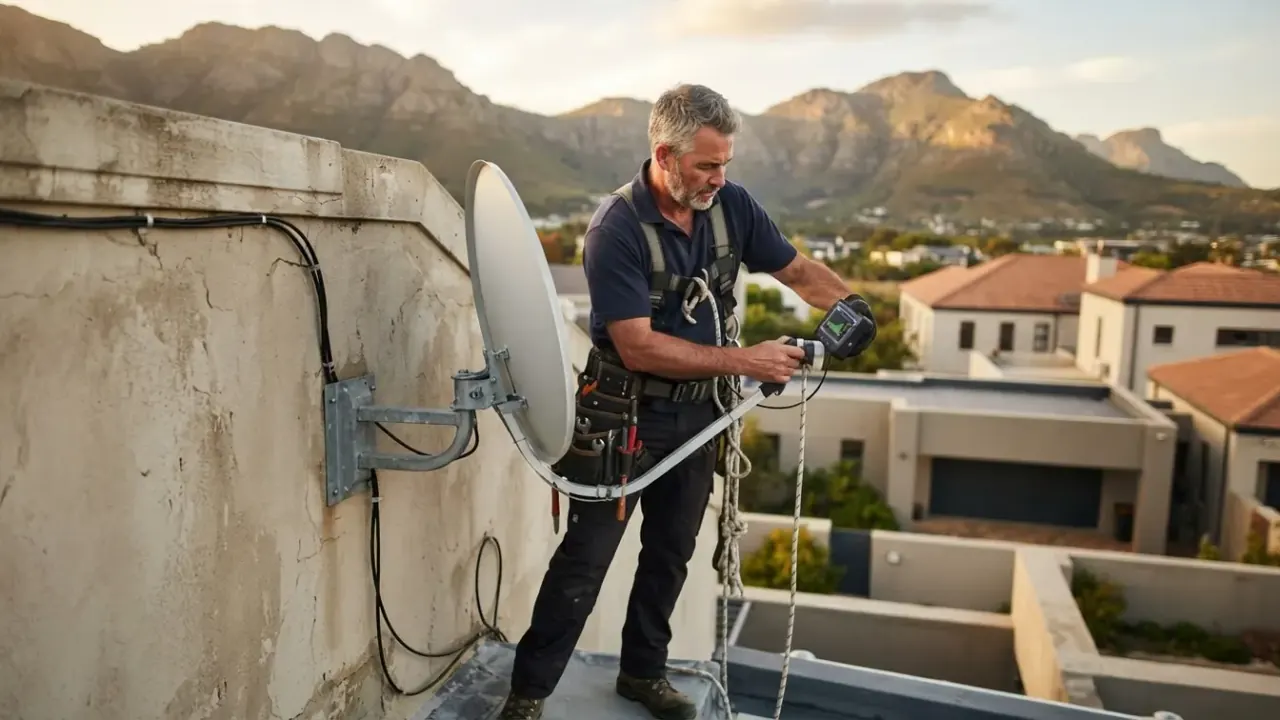
A standard Saamstaan home install includes the dish, bracket, LNB, RG6 cable run and decoder setup. We check line of sight before drilling, aim with a compass and inclinometer, and test signal at the decoder before we leave. Most jobs finish in two to three hours with a working picture.
Adding a second or third decoder in a Saamstaan home means splitting the LNB feed correctly so one point does not drag the others down. We fit the right splitter, run fresh RG6 to each new point, and test every outlet separately. This is the most common upgrade we do in family homes here.
E48-32 after wind, partial channel loss, or a picture that drops in rain are the faults we fix most in Saamstaan. We test the whole chain, dish alignment, LNB output, cable continuity and connector condition, rather than guessing at the most expensive part first. Most repairs are done in a single visit.
Moving house in Saamstaan means the dish, bracket and decoder come with you. We remove the old installation cleanly, seal the mounting holes, then re-install and re-aim at the new address. If the new property has an existing dish, we test it first and only replace what has actually failed.
- A signal that holds through Saamstaan's windy season instead of dropping every time the south-easter blows.
- Neat, clipped cable routing that does not leave loose RG6 hanging off your roofline or across a wall.
- Upfront pricing before work starts, so you know what a repair or install costs before we drill a single hole.