Full Signal Chain Test
We measure signal strength and quality at the dish and at the decoder with a satellite signal meter, then check the LNB, every F-connector and the RG6 coaxial cable run. This is how we find the real fault instead of guessing.
DStv Decoder Repairs in Western Cape means one thing here: your picture back on, fast. We test the decoder, LNB, dish alignment and RG6 cable run, then repair or replace what has actually failed - no guesswork, no upselling. Whether your Explora is stuck on E48-32 or a Pace unit will not switch on, our technicians cover the whole province, from the City Bowl to the Garden Route, with upfront pricing before we start.
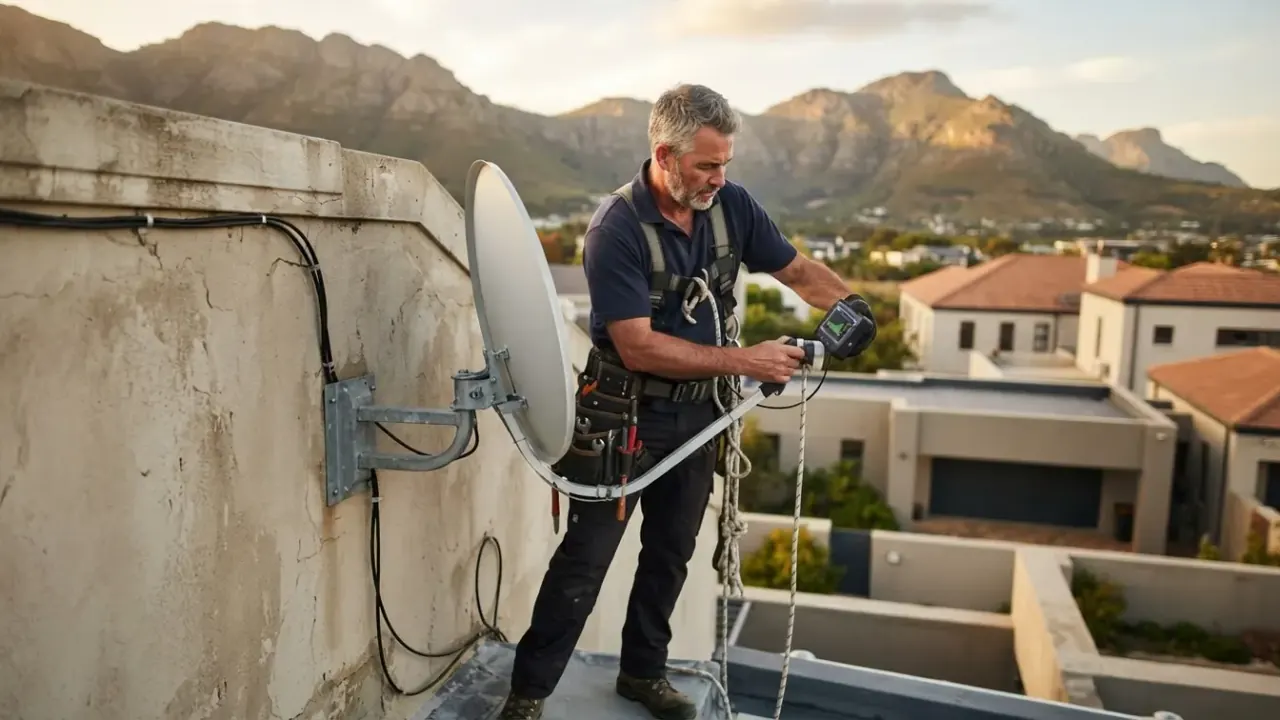
DStv Decoder Repairs in Western Cape is the fault-finding and repair of the decoder itself plus everything feeding it - the satellite dish, LNB, RG6 coaxial cable, F-connectors and HDMI output. A decoder that freezes, reboots on its own, or throws a smart card error is usually telling you something upstream has drifted. We run a satellite signal meter on the line, check signal strength and quality, inspect the LNB for water ingress, and test the HDMI path to your TV. Only then do we open the decoder. Most faults trace back to cable damage, a misaligned dish, or a power supply that has aged out.
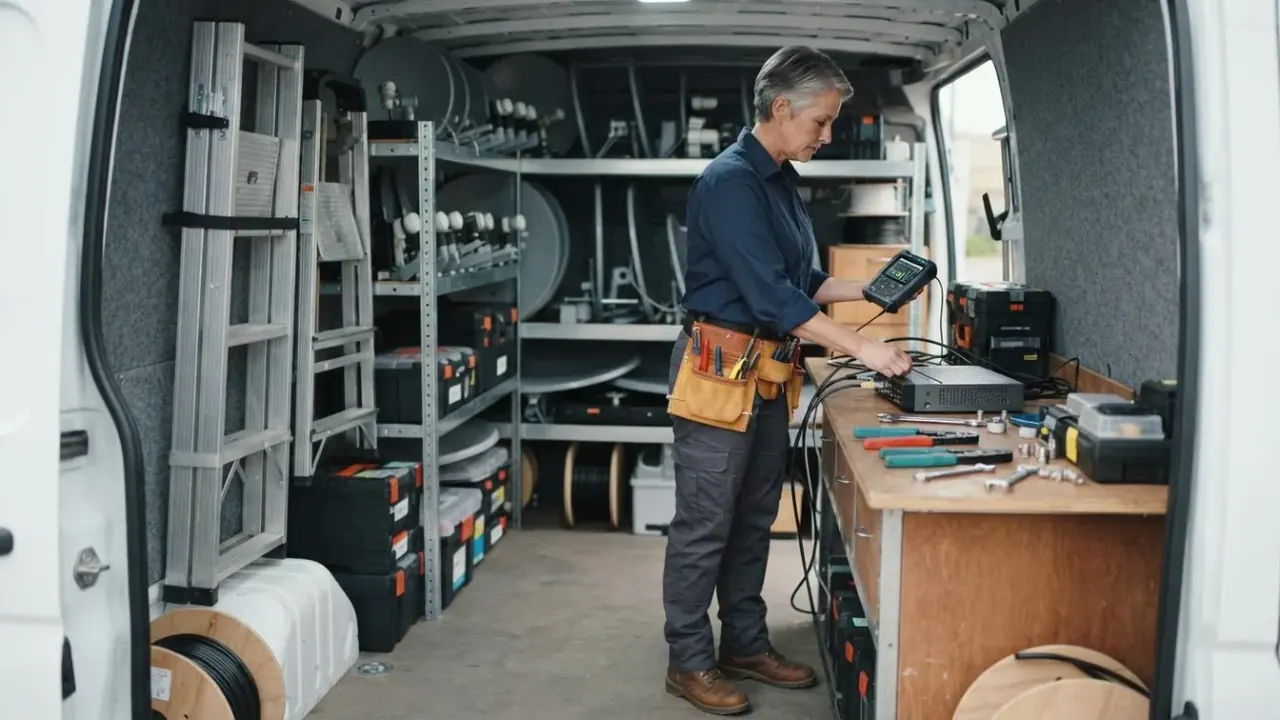
Cape weather is hard on satellite installations. South-easterly winds in summer push dishes off azimuth, winter downpours get into cheap F-connectors, and coastal salt air corrodes brackets in Bloubergstrand and Llandudno faster than inland. If you are searching for DStv decoder repair near me Western Cape, the honest answer is that half of what looks like a decoder fault is a signal problem. We carry replacement LNB units, RG6 cable and connectors on every van, so a single callout usually finishes the job. No return visits, no waiting a week for parts.
Every callout covers the full signal chain, not just the box under your TV. Here is what is included as standard, and what we quote separately if your setup needs it.
We measure signal strength and quality at the dish and at the decoder with a satellite signal meter, then check the LNB, every F-connector and the RG6 coaxial cable run. This is how we find the real fault instead of guessing.
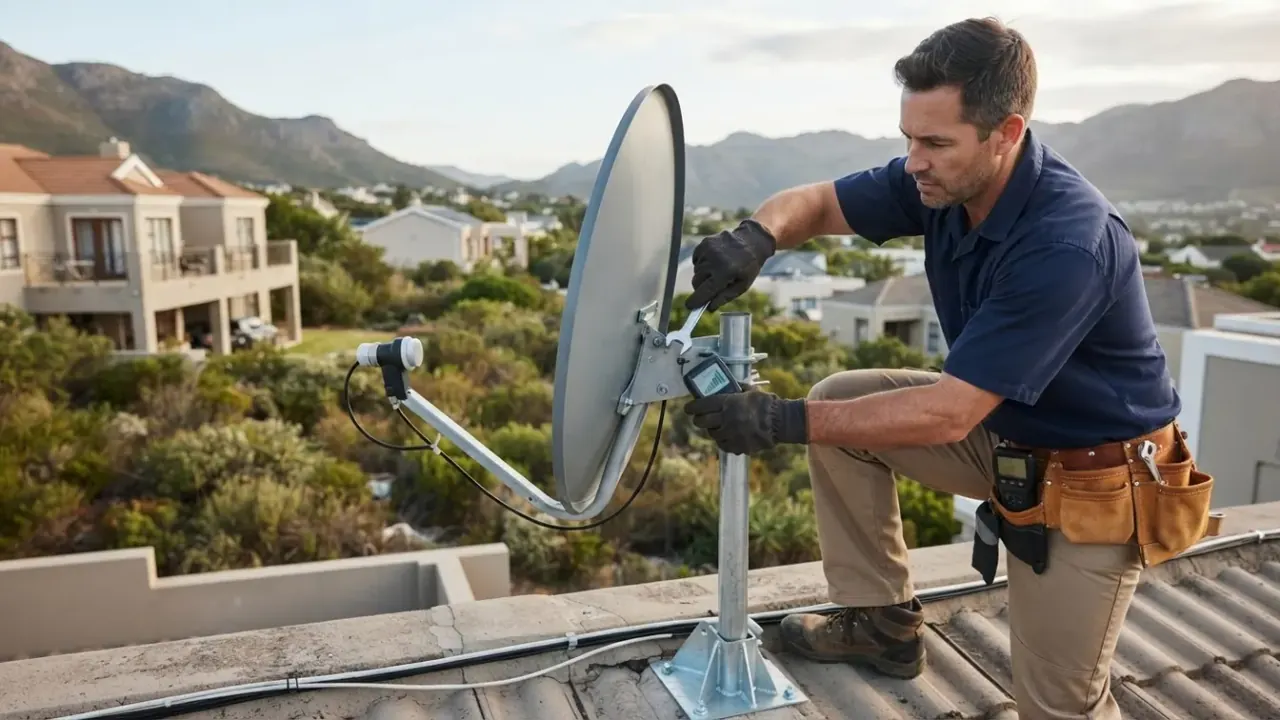
Cape winds move dishes. We check azimuth and elevation with a compass and inclinometer and re-peak the alignment if readings are low. Misalignment is one of the most common causes of intermittent picture and failed recordings.
Power supply, overheating, firmware and smart card seating are all checked. We read the error code, test the HDMI output with a tester, and confirm whether the decoder is genuinely faulty before recommending replacement.
Corroded F-connectors and damaged RG6 coaxial cable are replaced on site using a crimping tool and cable stripper. We clip and route the cable properly so it does not rub, sag or take on water again.
Full channel scan, HD and PVR function checks, remote and smart card verification, and a final signal reading you can see. We do not pack up until the system is working and you have signed off.
Repairs and replacements carry a 90-day warranty on our work. If the same fault returns within that window, we come back and sort it. Parts carry their own manufacturer warranty on top of that.
Tell us the error code on screen - E48-32, E143-0, no signal, or a decoder that will not power up. That one detail lets us load the right parts before we leave, which saves you a second visit. Takes about five minutes on the phone.
We connect a satellite signal meter at the decoder and again at the dish to isolate where the signal dies. Signal strength and quality readings tell us within minutes whether the problem is the dish, the LNB, the cable run, or the decoder itself.
Ladder up: we check dish alignment with a compass and inclinometer, inspect the LNB for water damage, and look at every F-connector along the run. Coastal properties often show corrosion here that inland homes never see.
Loose connector, damaged cable, failed LNB, or a decoder that has genuinely died - we fix or swap it on the spot. Decoder repairs and replacements carry a 90-day warranty on the work. Most jobs are done inside 90 minutes.
We run a full channel scan, check HD and PVR functions, confirm the remote and smart card read correctly, and show you the signal readings before we pack up. You sign off on a working system, not a promise.
Tell us the error code on screen - E48-32, E143-0, no signal, or a decoder that will not power up. That one detail lets us load the right parts before we leave, which saves you a second visit. Takes about five minutes on the phone.
Measures signal strength and quality at the dish and at the decoder, which is how we isolate whether the fault is alignment, LNB, cable or the decoder itself.
Sets and verifies dish azimuth and elevation precisely. Eyeballing a dish is why so many DIY installations lose signal in the first strong wind.
Tests decoder power supplies, voltage at the LNB, and continuity along the coaxial run. Essential for confirming a dead power supply before quoting a replacement.
Prepares coaxial cable and crimps F-connectors properly. A badly crimped connector is one of the most common causes of intermittent signal we find.
Confirms whether a no-picture fault sits in the HDMI cable or the decoder output, so we do not replace a healthy decoder.
For safe roof and high-wall access on dish work, including steep-pitch roofs common on Cape estates and coastal properties.
A family in Panorama had no signal for four days after a south-easterly storm. Their decoder showed E48-32 constantly and two resets had not helped. The dish had drifted roughly eight degrees off azimuth and the outdoor F-connector was corroded.
After: We re-aligned the dish with a compass and inclinometer, replaced the corroded connector and re-sealed the entry point. Signal quality came back to full and the error cleared within twenty minutes of arriving. Total job time was under an hour.
Book this service →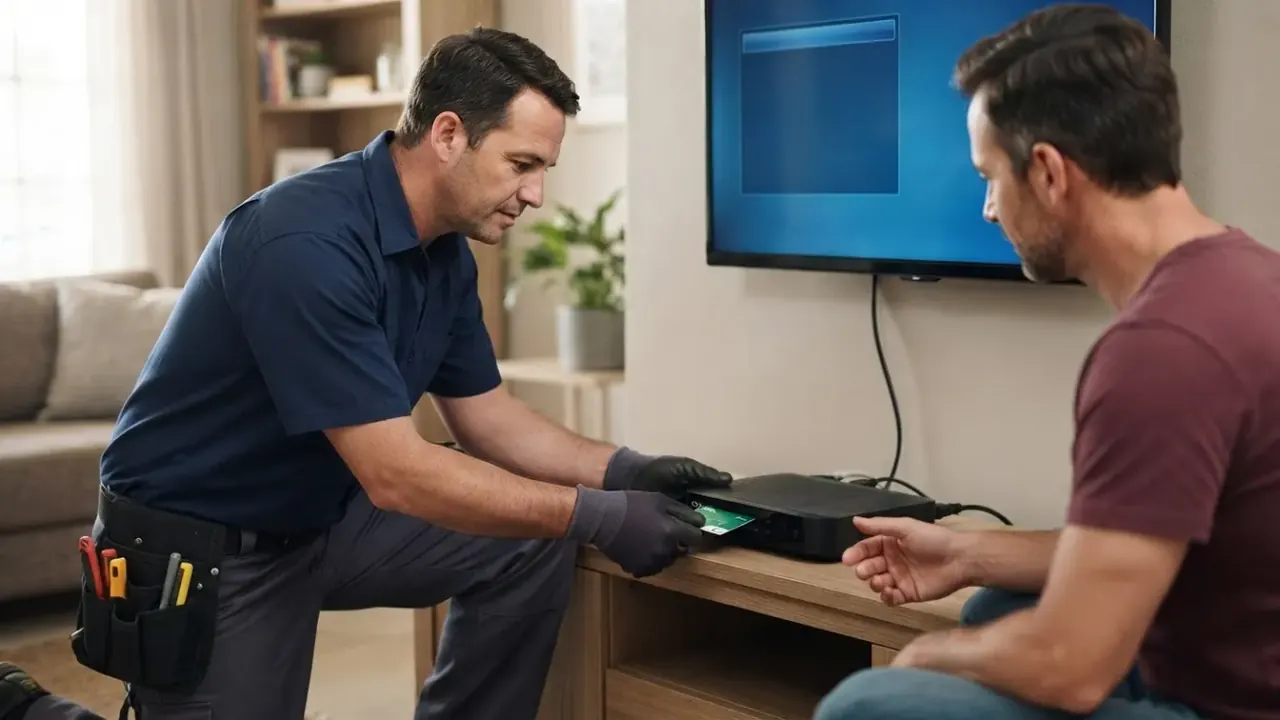
A customer in Durbanville was quoted for a new decoder because theirs froze every evening. The unit was four years old and worked perfectly in the morning. The real problem was a failing LNB losing polarisation switching as it warmed up during the day.
After: We replaced the LNB with an Ellies unit, re-crimped both outdoor connectors, and confirmed stable signal across all channels. The decoder was never faulty. The customer saved the full cost of a replacement decoder and kept their existing recordings.
Book this service →Three units in a Mowbray block had lost signal while the rest worked fine. The communal headend was healthy, but a section of RG6 coaxial cable in the riser had been damaged during earlier building work and was shorting intermittently.
After: We replaced the damaged cable section, re-crimped every connector on that leg, and tested signal at each of the three units. All three came back online the same afternoon with matching signal readings across the block.
Book this service →These are the faults we see most often, and what happens if you leave them. None of them get better on their own.
Ask a pro →We test the power supply and board with a multimeter, confirm whether the unit is repairable, and either fix it on site or supply and configure a replacement decoder with your existing smart card and settings.
We trace the signal from dish to decoder with a meter, checking alignment, LNB condition, cable continuity and connectors. Most E48-32 faults resolve with re-alignment or an LNB swap on the same visit.
We check card seating and contacts, test the decoder's card reader, verify firmware, and confirm the signal path. Where the fault sits with MultiChoice authorisation, we tell you exactly what to request.
We check ventilation and cabinet heat, measure signal quality, update firmware where applicable, and test the power supply. Freezing is often a weak signal or heat problem rather than a failing decoder.
“Our Explora kept freezing every evening around seven. Two other installers told us to buy a new decoder. These guys put a meter on the line, found the LNB had water in it, and swapped it in under an hour. Picture has been perfect for months and it cost a fraction of a new decoder.”
Riaan M.Homeowner, Panorama
✓ Verified“We manage a block of flats with a communal system and three units had no signal. They traced it to a damaged RG6 run in the riser, replaced the section, and re-crimped every connector on that leg. Clean work, proper invoice, and they signed in with security without any fuss.”
Fatima D.Body Corporate Trustee, Mowbray
✓ Verified“Salt air had wrecked the bracket and the dish had drifted. They re-aligned it with a proper inclinometer, replaced the corroded F-connectors, and showed me the signal readings before and after. No more E48-32 when the south-easter blows. Booked on a Friday, sorted on a Saturday.”
Johan v.Homeowner, Llandudno
✓ VerifiedMost decoder repairs in Western Cape land between R450 and R1,800 in 2026, depending on what has failed. A connector or cable fix sits at the low end; an LNB replacement or decoder swap sits higher. You get the callout fee and an estimate before we drive out, and the final invoice matches what we quoted unless we find something extra and phone you first.
Many decoders are repairable - power supply faults, overheating and corrupted software are all fixable on site. If the mainboard has failed or the unit is more than eight years old, replacement usually makes more financial sense. We test the full signal chain first, because roughly half the decoders customers want replaced are working fine and the real fault is upstream.
We do, across the whole province - Cape Town metro, the Winelands, the Overberg and the Garden Route. Book before midday and we aim for a same-day visit in most metro areas. Call 066 443 8385 with your error code and suburb, and we will confirm a time slot and load the right parts.
Freezing is usually one of three things: a weak signal from a misaligned dish or failing LNB, a decoder overheating in a closed TV cabinet, or aged firmware. Cape south-easterly winds push dishes off alignment, so signal-related freezing spikes in summer. We measure signal strength and quality, check ventilation, and update firmware where needed.
Our decoder repair coverage runs across the Western Cape, from the Cape Town metro through the Winelands and out along the coast. Wherever you are, the process is the same: phone with your error code, get a confirmed slot and price, and a technician arrives with the parts to finish the job. Here is how we deliver decoder repairs Western Cape wide in some of the areas we cover.
Annandale sits close to the Winelands with strong summer heat, so we check decoder ventilation and power supply condition alongside the signal chain on every callout here.
↗ 02 Bel'Aire Winelands EstateEstate access needs booking in advance. We handle the security process, arrive with ID, and complete decoder repairs and dish alignment without disrupting neighbours.
↗ 03 Blue LagoonBlue Lagoon's coastal position means salt exposure on outdoor connectors. We fit corrosion-resistant hardware and re-seal connections as standard on repairs here.
↗ 04 Brandwacht Aan De LinneWind exposure in this area moves dishes off alignment regularly. We re-peak azimuth and elevation with an inclinometer and torque mountings so they hold.
↗ 05 City BowlDense housing and shared walls make cable routing the challenge in the City Bowl. We work neatly in tight roof voids and along existing conduit without damaging finishes.
↗ 06 Croydon Olive EstateEstate properties here often run dual view setups. We test every decoder point and splitter individually so a fault in one room does not get misdiagnosed as a decoder failure.
↗ 07 De ZalzeNewer builds in De Zalze usually need correct alignment and a quality LNB rather than major repair. We verify signal readings at the decoder before signing off.
↗ 08 Die WeidesResidential decoder faults in Die Weides are mostly cable and connector related. We replace damaged RG6 sections and re-crimp every connector on the affected leg.
↗ 09 EppingCommercial and industrial premises in Epping often run multiple decoders on one distribution. We test signal levels at each point, not just the main feed.
↗ 10 Franschhoek Agricultural EstateLong cable runs across farm and estate buildings are common here. We trace the full run with a meter to find the exact failure point rather than replacing parts blindly.
↗ 11 Hangklip FoothillsStrong coastal wind is the main cause of signal loss in Hangklip Foothills. We re-align dishes and check mountings for movement after every windy season.
↗ 12 Hoogland EstateEstate rules often specify mounting and cabling standards. We work to ICASA compliant installation practice so the repair passes estate and insurance requirements.
↗ 13 KarindalOlder cabling in Karindal homes is a frequent culprit behind intermittent picture. We test continuity along the RG6 run and replace degraded sections on site.
↗ 14 KoelenhofWinelands heat stresses decoder power supplies in Koelenhof. We check ventilation and test the supply under load before confirming a decoder is genuinely faulty.
↗ 15 Laborie Wine Estate and EnclavesHospitality and residential points in Laborie need reliable signal year round. We prioritise bookings before busy periods and test every decoder point after repair.
↗Tell us the error code and your suburb, and we will confirm a slot and a price before we drive out. Same-day callouts across most of the Cape, 90-day warranty on the work, and parts on the van. One call sorts it.
Book a Repair 066 443 8385 →Call or WhatsApp 066 443 8385 and tell us the suburb, the error code and how many TVs you need. We answer seven days a week from 08:00, with 24/7 emergency call-outs for signal loss. Most Western Cape jobs are booked same-day or next-day, and you get a price before we dispatch a van.