Your local Observatory DStv Installation team

DStv Installation in Observatory Done Right First Time

DStv Installation in Observatory is what our technicians do every week, from the Victorian semi-detached cottages along Station Road to the student flats off Lower Main Road. We mount the dish, align it with a satellite signal meter, crimp new RG6 coaxial cable, and leave you with a picture that holds through Cape Doctor wind and winter rain. One visit, upfront pricing, no guesswork.

1,400+Observatory jobs logged
24/7Emergency call-out
90 minAverage on-site time

Licensed · Upfront options · Clean work areas · Written guarantees

DStv Installation in Observatory You Can Actually Rely On

Observatory sits between Salt River and Mowbray, and the housing stock here is unlike anywhere else in the Southern Suburbs. You get narrow Victorian terraces on the lower slopes, converted student digs, and older blocks of flats where the roof space is tight and the existing coax has been spliced three or four times. That mix is exactly why our DStv Installation in Observatory work leans on proper testing rather than guesswork. We carry a satellite signal meter, a compass and inclinometer, and an HDMI tester on every van, so we can prove the signal before we pack up. If your dish is fighting the south-easter or your LNB has quietly failed after a wet winter, we find it in one visit. We also handle OpenView HD and Explora setups for households that want a second or third view without running new cable through the whole house. Book a slot and we will tell you straight what your roof and your existing wiring can support.

Explore Observatory services →

Observatory has a dense rental market and a steady flow of students and young professionals moving in and out between February and March. That churn creates constant demand for DStv Relocation and quick decoder swaps, often on tight timelines before a lease starts. The older housing stock also means dishes are frequently mounted on timber fascias or shared chimney stacks rather than solid brick, which changes how we bracket and seal every install. We work around those constraints instead of drilling through them.

HDTEK
Services available in Observatory

DStv Installation Services Available Across Observatory

Every service we run in Observatory starts with the same question: what does your roof, your wall and your existing cable actually allow? From there we quote a satellite dish installation near me call-outs, LNB repairs, decoder faults and multi-view setups without padding the job. Most Observatory bookings are handled same-day or next-day, and we carry the common spares on the van so you are not waiting a week for a part.

01
␁

Satellite Dish Installation Near Me

New dish mounts across Observatory, from terraces on the lower slopes to flats near the station. We check line of sight, fit a wall or pole bracket, run fresh RG6 coaxial cable and align with a signal meter. Timber fascias and shared roofs get extra sealing so the Cape Doctor does not work the bracket loose.

See details ↓
02
↯

LNB Repairs

LNB failure shows up as channels dropping in rain or a signal that fades by evening. We test the LNB with a meter, swap the failed unit for a Hirschmann or Ellies replacement, and re-peak the dish. Common in Observatory blocks where the original LNB has been outside for years without a cover.

See details ↓
03
≈

HDMI and RG6 Coaxial Cable Installation and Repairs

Old spliced coax is the number one cause of weak signal in Observatory rentals. We strip and re-terminate with an RG6 cable stripper and crimping tool, replace damaged runs, and fit HDMI cable where the decoder feeds a second TV. Cable clips and neat routing keep the install tidy on older walls.

See details ↓
04
◒

DStv Decoder Repairs

Decoder freezing, smart card error E143-0 and units that will not boot are routine calls here. We test the power supply, check the card reader, and confirm the signal reaching the decoder with a multimeter before deciding on a repair or swap. Most Observatory decoder faults are resolved on the first visit.

See details ↓
05
◎

Dual and Triple View Installation

Shared houses and family homes in Observatory often want two or three views off one dish. We fit a multi-switch, run separate RG6 runs to each decoder, and label every cable. Explora and Pace decoders both supported, with the signal balanced so no room gets a weaker picture than another.

See details ↓
06
+

DStv Relocation

Moving between Observatory rentals is common, and so is the call to move the dish and decoder. We remove the old mount, patch and seal the holes, then reinstall at the new address and re-align. Same-day relocations are possible when both addresses are in the Southern Suburbs.

See details ↓
07
␁

DStv Signal Loss E48-32 Repair

E48-32 means the decoder has lost the satellite signal, and in Observatory it usually traces back to a misaligned dish, water in an F-connector or a failing LNB. We meter the line end to end, fix the actual fault, and confirm the error clears before we leave site.

See details ↓
08
↯

DStv E143-0 Repair

E143-0 points at a smart card or decoder authorisation problem rather than the dish. We reseat and test the card, check the decoder firmware, and confirm the subscription side is talking to the unit. If the decoder itself is failing, we say so plainly and quote a replacement.

See details ↓
09
≈

Communal DStv Installation Service

Older Observatory blocks often run one head-end feeding many units. We service and re-balance communal systems, replace splitters and amplifiers, and trace faults unit by unit so the whole building is not offline for a single bad cable. Body corporates get a written report after the visit.

See details ↓
10
◒

Open View Installation

For Observatory households that want free-to-air channels without a subscription, we install and align an OpenView HD decoder and dish. Same mounting and cable standards as a DStv job, with the signal peaked on the correct satellite and the decoder set up ready to watch.

See details ↓
Who we serve in Observatory

Two very different jobs. One local crew.

For homes

Residential DStv Installation Across Observatory Homes

Most of our Observatory work is residential, and the housing mix keeps it interesting. We install in Victorian terraces on the lower slopes, freestanding family homes up toward the M3, and flats above the shops on Lower Main Road. Rentals turn over quickly here, so we handle a lot of DStv Relocation jobs for tenants moving between streets. Families usually want a second or third view so the kids are not fighting over the lounge TV, and we can run those extra cables neatly without tearing up the house.

01New dish installs for homes

We mount, align and test a new dish for Observatory houses and flats, using SABS approved equipment and sealing every outdoor connection. Most installs are done in a single 60 to 90 minute visit, with the signal reading shown to you before we leave.

02Second and third view setups

Shared houses and family homes in Observatory often want two or three decoders off one dish. We fit a multi-switch, run separate RG6 runs to each room, and balance the signal so no TV gets a weaker picture than another.

03Decoder repairs and swaps

Freezing, rebooting and smart card errors are common in Observatory's older flats where decoders sit in tight cabinets. We test the unit properly and only recommend a replacement when a repair will not hold.

04Relocation between Observatory rentals

Moving between Observatory addresses is routine for us. We remove the old dish, seal the mounting holes, reinstall at the new place and re-align, often on the same day if both addresses are in the Southern Suburbs.

  • Upfront pricing before we start, with no surprise add-ons at the end of the job.
  • Every outdoor connector sealed against Cape winter rain, so the signal holds through the wet months.
  • A signal meter reading shown to you before we leave, proving the install is correct.
Get a home estimate →
For businesses

Commercial DStv Installation for Observatory Businesses

Observatory's commercial strip along Lower Main Road is a mix of cafes, restaurants, small offices and guesthouses, many with residential units above. Commercial DStv Installation here means dealing with shared roofs, multiple decoders and a business that cannot afford to be offline during trading hours. We schedule commercial work around your opening times, including early morning slots before the first customers arrive. If you need a satellite dish installation near me for a business premises, we survey the roof, plan the cable route and quote the whole job before we start.

  • Cafes and restaurants
  • Guesthouses and B&Bs
  • Small offices
  • Retail shops
  • Body corporates
01Work scheduled around trading hours

We book Observatory commercial jobs for early mornings or quiet periods so your screens are back on before the rush. If a fault takes you offline mid-service, we treat it as a priority call-out and get there as fast as the route allows.

02Multi-decoder and communal systems

Many Observatory business premises run several screens off one dish. We design and balance multi-view systems, label every cable, and leave a simple diagram so your staff know what feeds what.

03Body corporate and landlord coordination

Shared roofs and communal head-ends need approval and clear access. We handle that coordination, document any new mounting points, and give the managing agent a short written report after the visit.

04Maintenance plans for busy venues

For guesthouses and restaurants that cannot afford downtime, we offer scheduled signal checks before winter and before the December peak. A short maintenance visit is far cheaper than an emergency call-out during a full house.

Discuss a commercial contract →
01
Satellite Dish Installation Near Me in Observatory

Satellite Dish Installation Near Me in Observatory

Searching for satellite dish installation near me in Observatory? HDTEK delivers expert dish mounting and alignment across this historic suburb. From the steep Victorian rooftops along Lower Main Road to modern apartment blocks near the station, we handle wind-exposed positions and heritage restrictions. Our teams know Observatory's leafy streets and quirky architecture, ensuring a stable signal despite Cape Town's seasonal south-easter. We install DStv-approved dishes with rust-resistant brackets.

a

Roof and Wall Mounting

Observatory's mix of corrugated iron roofs and face-brick walls demands versatile mounting. We use heavy-duty brackets that withstand the Cape Doctor, securing dishes on gables, parapets, or chimney stacks. For renters in flats along Trill Road, we offer non-penetrating wall mounts that leave no damage. Every installation includes a waterproof cable entry and drip loop.

b

Signal Alignment for DStv

Achieving peak signal in Observatory requires precise azimuth and elevation. We use professional meters to lock onto the DStv satellite, avoiding interference from nearby trees and buildings. Whether you're in a Victorian cottage or a new development, we fine-tune the dish for maximum rain margin, so you enjoy uninterrupted viewing during Highveld storms.

c

Cable Routing and Concealment

We route RG6 coaxial cable neatly along eaves, downpipes, and skirting boards, preserving your home's character. In Observatory's older homes, we fish cables through existing conduits where possible. For exposed sections, UV-stable clips and conduit protect against sun damage. The result is a tidy installation that blends with your property.

02
LNB Repairs in Observatory

LNB Repairs in Observatory

When your DStv signal drops, LNB repairs in Observatory might be the fix. HDTEK diagnoses and replaces faulty low-noise block downconverters across this suburb. Observatory's coastal humidity and temperature swings can corrode LNB connections, especially on exposed dishes. We test each unit with professional meters, restoring clear reception. From Main Road to the observatory precinct, our technicians carry universal and DStv-specific LNBs for immediate replacement.

a

Diagnosing LNB Failure

Common signs include 'no signal' errors on specific channels or complete loss during light rain. We measure LNB voltage and signal quality to confirm failure. In Observatory's older homes, we often find water ingress in the LNB port. Our diagnostic process isolates the LNB from cable and decoder issues, ensuring you only pay for the correct repair.

b

Universal and DStv LNBs

We stock both universal and DStv Smart LNBs to match your decoder model. For HD and PVR decoders, we install wideband LNBs that support multiple tuners. Observatory residents with dual-view setups benefit from our twin-LNB replacements. Each new LNB is weather-sealed and aligned for optimal cross-polarisation isolation.

c

Weatherproofing Connections

Observatory's winter rains and summer south-easter can degrade exposed F-connectors. We apply silicone grease and self-amalgamating tape to every LNB port. For dishes mounted on wind-prone roofs, we use UV-resistant cable ties and drip loops. This preventive approach extends LNB life and reduces future callouts.

03
HDMI and RG6 Coaxial Cable Installation and Repairs in Observatory

HDMI and RG6 Coaxial Cable Installation and Repairs in Observatory

HDTEK provides expert HDMI and RG6 coaxial cable installation and repairs in Observatory. Whether you're upgrading a home theatre in a Victorian cottage or fixing a corroded cable in a modern apartment, we handle it. Observatory's older buildings often have legacy cabling that fails under load. We run new RG6 for DStv and HDMI for AV systems, ensuring clean signal transfer. Our team works neatly around heritage features.

a

RG6 Cable for DStv

RG6 coaxial cable is essential for reliable DStv signal. We install high-quality, copper-core RG6 with proper compression connectors. In Observatory's damp climate, we use UV-stable outer jackets and seal all connections. For multi-room setups, we run dedicated cables from the LNB or multiswitch, avoiding signal loss.

b

HDMI for Home Theatre

HDMI cables carry high-definition video and audio between decoders, TVs, and sound systems. We supply and install certified HDMI cables, including in-wall versions for clean installations. Observatory homes with plaster-and-lath walls require careful fishing; we use flexible rods and magnets to route cables without damage.

c

Repairs and Fault Finding

Intermittent picture or sound often points to damaged cable. We trace faults using time-domain reflectometers and signal meters. For RG6, we replace corroded connectors or crushed sections. For HDMI, we test continuity and replace failed cables. Our repairs restore full performance without unnecessary rewiring.

04
DStv Decoder Repairs in Observatory

DStv Decoder Repairs in Observatory

HDTEK offers reliable DStv decoder repairs in Observatory. If your decoder shows no picture, freezes, or fails to record, our technicians can help. Observatory's power surges and humidity can affect sensitive electronics. We diagnose common issues like faulty power supplies, corrupted software, and tuner failures. From single-view to PVR models, we aim to repair rather than replace, saving you money.

a

Common Decoder Faults

Observatory users often report error codes like E48-32 or a blank screen. These can stem from signal loss, software glitches, or hardware failure. We run diagnostic tests on the power board, tuner, and hard drive. For PVR decoders, we check recording functionality and replace failed hard drives with compatible units.

b

Software and Firmware Fixes

Corrupted firmware can cause boot loops or missing channels. We reflash decoder software using official DStv tools. In Observatory, load-shedding may interrupt updates, leaving decoders in a stuck state. Our technicians perform forced firmware reloads and reset parental locks, restoring normal operation without data loss where possible.

c

Hardware Replacement

When repair isn't viable, we replace faulty components like power supplies or tuner modules. We use genuine DStv parts to ensure compatibility. For older decoders in Observatory's rental stock, we advise on upgrade options. All repairs come with a warranty, giving you peace of mind.

05
Dual and Triple View Installation in Observatory

Dual and Triple View Installation in Observatory

HDTEK specialises in dual and triple view installation in Observatory, letting you watch different channels in multiple rooms. Whether you're in a shared student house near the university or a family home in the observatory precinct, we set up independent viewing. Our solutions use smart LNBs and multiswitches to feed each decoder. We handle all cabling and configuration for seamless operation.

a

Smart LNB and Multiswitch

Dual and triple view requires a smart LNB or multiswitch to split the satellite signal. We install wideband LNBs that support multiple tuners, then route cables to each decoder. In Observatory's older buildings, we find creative paths for additional cables, often using existing conduits to minimise disruption.

b

Independent Decoder Setup

Each TV needs its own decoder and viewing card. We configure decoders for independent channel selection, ensuring no conflicts. For PVR functionality, we set up recording priorities. Observatory residents appreciate our clear explanation of how to manage multiple decoders and avoid signal clashes during peak viewing.

c

Cable Management for Multi-Room

Running multiple RG6 cables can look messy if not planned. We use colour-coded cables and label each run at the multiswitch. In Observatory's heritage homes, we conceal cables behind skirting or in ceiling voids. Our tidy installations keep your home organised and ready for future upgrades.

06
DStv Relocation in Observatory

DStv Relocation in Observatory

Moving home or office in Observatory? HDTEK handles DStv relocation with minimal downtime. We dismantle your existing dish, LNB, and cabling, then reinstall at your new address. Observatory's varied building styles mean each relocation is unique. Whether you're moving from a flat on Main Road to a house in the observatory precinct, we ensure your DStv service continues seamlessly. We also update your account details if needed.

a

Dismantling and Transport

We carefully remove your dish, LNB, and decoder, labelling cables for easy reinstallation. In Observatory's rental properties, we patch mounting holes to protect your deposit. All equipment is packed securely for transport. If your dish is damaged, we advise on replacement options before the move.

b

Reinstallation at New Address

At your new Observatory home, we survey the best mounting position, considering line of sight and landlord rules. We reinstall the dish, align it for optimal signal, and reconnect your decoder. For communal living, we coordinate with body corporates. Our goal is to have you watching DStv within hours.

c

Account and Decoder Updates

Relocation may require updating your DStv account with the new address. We guide you through the process or handle it on your behalf. If you're upgrading to a newer decoder, we configure it during the relocation. Observatory customers appreciate our end-to-end service, from unplugging to watching.

07
DStv Signal Loss E48-32 Repair in Observatory

DStv Signal Loss E48-32 Repair in Observatory

HDTEK repairs DStv signal loss E48-32 in Observatory. This error means your decoder isn't receiving a strong enough signal. Observatory's tree-lined streets and coastal weather can disrupt reception. We diagnose the root cause, whether it's a misaligned dish, faulty LNB, or damaged cable. Our technicians use professional meters to restore your signal, often within a single visit. Don't let E48-32 ruin your viewing.

a

Diagnosing E48-32 Causes

We start by checking signal strength and quality on your decoder. In Observatory, common culprits include dish movement from strong winds, water ingress in the LNB, or corroded F-connectors. We also rule out decoder tuner failure. Our systematic approach pinpoints the exact issue quickly.

b

Realigning and Repairing

If the dish has shifted, we realign it using satellite meters for precise azimuth and elevation. For LNB faults, we replace the unit and weather-seal connections. Damaged RG6 cable is swapped out with high-quality coaxial. After repairs, we verify signal strength across all channels, ensuring E48-32 is gone.

c

Preventing Future Loss

To avoid repeat E48-32 errors, we secure dishes against Observatory's south-easter and apply corrosion protection. We advise on trimming overhanging branches and checking connections seasonally. For communal systems, we recommend a signal audit. Our preventive tips keep your DStv running smoothly.

08
DStv E143-0 Repair in Observatory

DStv E143-0 Repair in Observatory

HDTEK provides expert DStv E143-0 repair in Observatory. This error typically indicates a problem with your decoder's connection to the satellite or a smartcard issue. Observatory residents often see E143-0 after power outages or firmware glitches. We troubleshoot the decoder, cabling, and LNB to resolve the error. Our technicians carry replacement smartcards and testing equipment for fast fixes.

a

Understanding E143-0

E143-0 often appears when the decoder cannot decode the signal, pointing to a smartcard or tuner fault. In Observatory's older decoders, worn card readers are common. We test the smartcard in a known-good decoder to isolate the issue. If the card is faulty, we arrange a replacement.

b

Decoder and Smartcard Fixes

We clean smartcard contacts and reseat the card. If the decoder's card reader is damaged, we repair or replace it. For software-related E143-0, we perform a factory reset and reflash firmware. Observatory customers appreciate our no-fix-no-fee policy on diagnostics.

c

Signal and Cable Checks

Sometimes E143-0 stems from poor signal quality. We measure the signal at the decoder and LNB. If cable loss is high, we replace RG6 runs. For communal systems in Observatory, we check the multiswitch. Restoring a strong signal often clears the error.

09
Communal DStv Installation Service in Observatory

Communal DStv Installation Service in Observatory

HDTEK offers professional communal DStv installation service in Observatory for apartment blocks, student residences, and body corporates. Observatory's dense housing stock includes many shared buildings that require a single satellite system feeding multiple units. We design and install headend systems with multiswitches, ensuring each tenant receives reliable signal. Our solutions comply with body corporate rules and minimise visual impact on heritage facades.

a

Headend and Multiswitch Design

We plan the headend location to optimise signal and accessibility. For Observatory's older blocks, we often use roof spaces or service ducts. We install high-gain dishes and multiswitches sized to the number of units. Each output is balanced for consistent signal strength, avoiding weak points in long cable runs.

b

Cabling for Multiple Units

Running cables to each apartment requires careful planning. We use existing conduits where possible and install new trunking where needed. In Observatory's heritage buildings, we avoid damaging original features. All cables are labelled at the multiswitch for easy maintenance. We also install wall plates for neat tenant connections.

c

Maintenance and Support

Communal systems need regular maintenance. We offer service contracts that include signal audits and connector checks. Observatory body corporates appreciate our proactive approach, reducing tenant complaints. If a fault occurs, we respond quickly, often resolving issues without entering individual units.

10
Open View Installation in Observatory

Open View Installation in Observatory

HDTEK installs Open View HD decoders and dishes in Observatory. If you're looking for free-to-air satellite TV, Open View offers a great channel lineup without monthly fees. Observatory's mix of homes and apartments can accommodate Open View with a small dish. We supply and install the decoder, dish, and cabling, ensuring you receive all available channels. Our technicians also configure your TV and remote.

a

Open View Dish Setup

Open View uses the IS-20 satellite, requiring a slightly different dish alignment than DStv. We mount the dish on a secure wall or roof point, avoiding obstructions. In Observatory's tree-lined streets, we find the best line of sight. The dish is small and unobtrusive, ideal for rental properties.

b

Decoder and Channel Scan

We connect the Open View decoder to your TV via HDMI or RCA, then perform a channel scan. Observatory residents receive all Open View channels, including news, sport, and entertainment. We demonstrate how to use the electronic programme guide and set reminders. Parental controls can be configured on request.

c

Cabling and TV Integration

We run RG6 cable from the dish to the decoder, concealing it neatly. If you have a wall-mounted TV, we route HDMI cables in-wall for a clean look. For Observatory homes with multiple TVs, we can install a second decoder or use a modulator to share the signal.

More than a service list

How We Run DStv Installation Work in Observatory

Observatory jobs are scheduled around parking, and that matters more here than in most suburbs. Lower Main Road and the streets off Station Road are tight, so we plan the van position before we climb. On site we work to

01

Cape Doctor wind battering roof-mounted dishes

South-easterly gusts through spring and summer push dishes off alignment, so channels drop even though nothing has failed electrically. Roof mounts on exposed Observatory terraces move first.

How we handle it We use heavier wall brackets, brace pole mounts, and torque every bolt properly. On exposed roofs we re-check alignment after the first strong wind and adjust at no extra charge if the dish has shifted.

02

Older spliced coax in rental conversions

Many Observatory flats have coax that has been joined two or three times by previous tenants, which drops signal strength and causes intermittent picture breakup rather than a clean fault.

How we handle it We strip and re-terminate every join with an RG6 cable stripper and crimping tool, or replace the full run where the cable is perished. Then we meter the line to confirm the loss is within spec.

03

Shared roofs and body corporate access

In blocks around the station, the dish sits on a communal roof, so access needs the managing agent's approval and a slot that does not clash with other trades.

How we handle it We coordinate access through the body corporate or landlord, work within agreed hours, and leave the roof as we found it. Any new mounting point is documented so the building has a record.

Reviews from Observatory customers

What Observatory Customers Say

4.9★★★★★verified reviews
★★★★★
“Our signal kept dropping every time the wind picked up. The technician re-aligned the dish, replaced the LNB and sealed the connectors properly. He also showed me the signal reading on his meter before and after, which I appreciated. Three months on and we have not lost a channel once.”
TM

Thandi M.Station Road

Verified
★★★★★
“Booked them for a DStv relocation when we moved from a flat on Lower Main Road to a house nearby. They handled the whole thing in one visit, patched the old mounting holes and had the new dish aligned the same afternoon. Clean work and no mess left behind.”
RV

Riaan V.Lower Main Road

Verified
★★★★★
“We had the E143-0 error and thought the decoder was finished. They tested everything, reseated the smart card and sorted the authorisation issue without pushing a new decoder on us. Honest about what was actually wrong, which is rare. Will use them again for the second TV.”
AK

Aisha K.Trill Road

Verified
Recent work in Observatory

Recent DStv Installation Jobs in Observatory

These are the kinds of calls we get most weeks in Observatory. Names are left out, but the problems, the fixes and the numbers are real.

01 Station Road
The problem
A tenant on Station Road reported channels breaking up every evening, with the picture fine in the morning. The landlord had already replaced the decoder once.
What we did
We metered the line and found the signal dropping sharply at an old splice behind the skirting. The coax was re-terminated with a crimping tool, the F-connectors replaced, and the dish re-peaked after checking alignment with a compass and inclinometer.
The result
Signal strength came back to normal across all channels, and the tenant reported no breakup over the following month. Job took 75 minutes.
02 Lower Main Road
The problem
A block of flats off Lower Main Road had four units showing E48-32 at the same time, which pointed at the communal head-end rather than any single decoder.
What we did
We traced the communal feed, found a corroded splitter and water in an outdoor connector, and replaced both. The head-end was re-balanced so each unit received an even signal, and every outdoor connection was sealed with a weather boot.
The result
All four units were back online the same afternoon, and the body corporate received a short written report on the fault. Total on-site time was just over two hours.
03 Trill Road
The problem
A family moving into a Trill Road house wanted two views, one in the lounge and one in the main bedroom, with the decoder relocated from their old flat.
What we did
We removed the old dish and mount, sealed the holes, installed a new bracket on the new roof, and ran two separate RG6 runs to a multi-switch. Both decoders were tested with an HDMI tester before handover.
The result
Both rooms had a clean picture on the first evening, and the old address was left watertight. The relocation and dual-view setup took a single visit of about three hours.
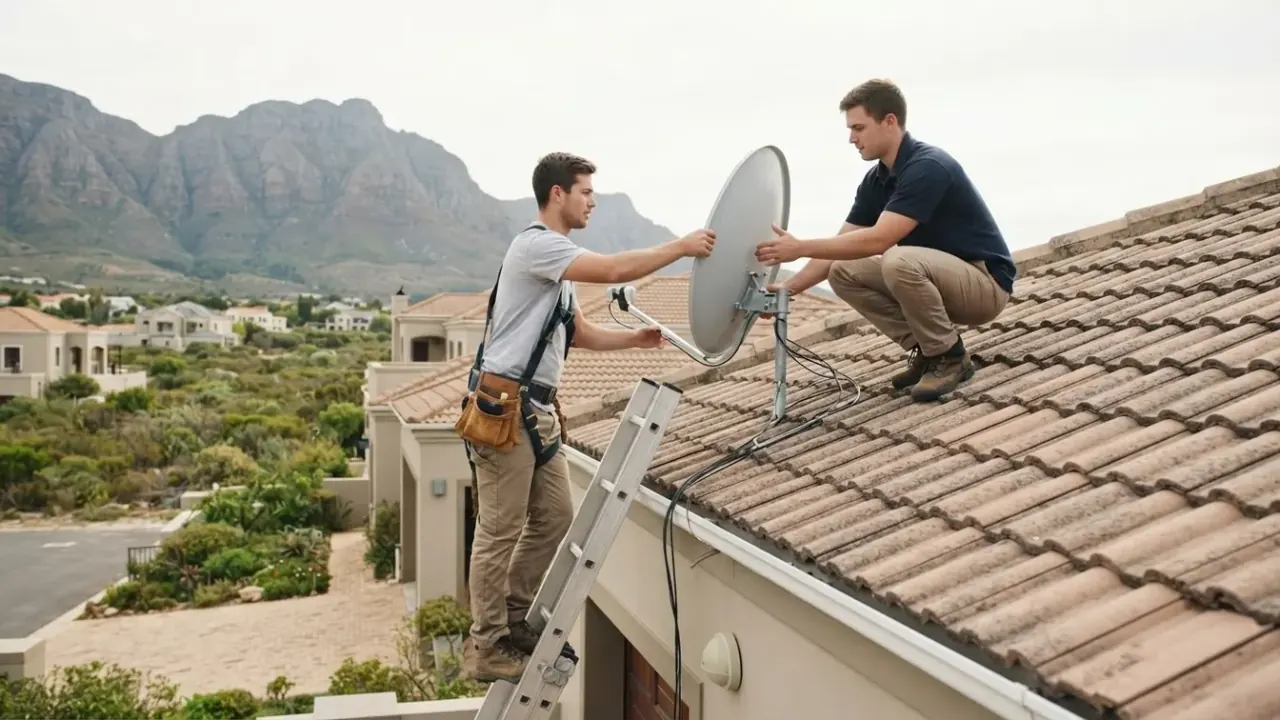
DStv Installation in Western Cape: DStv installer on a ladder, handing a newly installed satellite dish to a colleague on a
Early warning signs

Signs You Need DStv Installation Help in Observatory

01Channels break up in wind or rain

02E48-32 error on screen

03Decoder freezes or reboots itself

04Some channels work, others do not

05You are moving house within Observatory

Have us take a look →
Observatory problem patterns

Common DStv Problems We Fix in Observatory

Observatory's mix of old housing, shared roofs and coastal winter weather creates a predictable set of faults. Knowing which ones are common here helps us bring the right parts on the first visit, so you are not waiting on a second appointment.

01

Dish knocked out of alignment by the south-easter

Why it happens Exposed roofs on the upper slopes take the full force of the Cape Doctor. Even a small shift of a few degrees is enough to drop the signal below the decoder's threshold.

Our approach We re-peak the dish with a signal meter rather than eyeballing it, brace the mount, and torque the bolts. On the most exposed roofs we recommend a heavier bracket from the start.

02

Water in outdoor F-connectors

Why it happens Cape winter rain finds any unsealed connector. Once water reaches the centre conductor, corrosion sets in and the signal fades slowly over weeks.

Our approach We fit weather boots and silicone on every outdoor connection and route cable with a drip loop. If the connector is already corroded, we cut it back and re-terminate with fresh cable.

03

Failed LNB after several seasons

Why it happens LNBs do not last forever, especially when they are exposed without a cover. In Observatory's older blocks, the original LNB is often well past its service life.

Our approach We test the LNB under load, replace it with a Hirschmann or Ellies unit, and re-align the dish at the same time. That way you get a full signal check, not just a part swap.

04

Spliced coax in converted rental flats

Why it happens Years of tenant changes mean cable has been joined repeatedly, often badly. Each poor splice costs signal, and the cumulative loss eventually shows up as picture breakup.

Our approach We strip and re-terminate every join properly, or replace the full run where the cable is perished. Then we meter the line to confirm the loss is within spec before leaving.

Observatory through the year

How Observatory Seasons Affect Your DStv Setup

Observatory's weather drives a clear seasonal pattern in DStv Installation work. Spring and summer bring wind-related alignment calls, while winter is all about water ingress and signal fade. Planning around those cycles saves you a mid-winter emergency.

❊

Spring

The south-easter arrives in force, and dishes on exposed roofs start drifting out of alignment. Signal breakup on windy days is the most common call we get in October and November.

Tip Book a re-alignment check before the wind peaks. It is a short job and far cheaper than replacing a dish that has been worked loose over a full season.

☀

Summer

Hot, dry days are easier on connectors, but the wind keeps working on brackets and mounts. Decoders in poorly ventilated flats also run hotter and can start freezing.

Tip Give your decoder room to breathe and check that the dish bolts are still tight. If you are adding a second view for the holidays, book the multi-view install early.

❄

Fall

The first proper rain of the year finds any unsealed connector. Signal fade that builds over a few weeks is typical, and it often gets blamed on the decoder first.

Tip Get outdoor connectors checked and sealed before winter. It is a ten-minute job during a routine visit and prevents the slow corrosion that kills a cable run.

❅

Winter

Cape winter rain and cold are the hardest test for an Observatory install. Water ingress, corroded F-connectors and weak signals in bad weather are the standard calls from June through August.

Tip If your picture drops in heavy rain, do not wait it out. Book a signal test and we will find whether it is the LNB, the connector or the alignment before it fails completely.

We know the route

Getting Around Observatory: Landmarks We Use

Observatory is compact, but the one-way streets and tight parking mean we navigate by landmarks rather than by address alone. Knowing where the station, the main road and the hospital are lets us plan the van position before we arrive, which saves you time and saves us a second trip.

HObservatory

Observatory railway station

A central orientation point for jobs on Station Road and the surrounding streets. We use it to plan parking and access, since the roads around it are narrow and busy in the morning.

HObservatory

Lower Main Road

The main commercial spine through Observatory. Useful for locating flats and shops above street level, where dishes often sit on shared roofs and cable runs must avoid the shopfronts.

HObservatory

Groote Schuur Hospital

Sits just south of Observatory and marks the boundary toward Mowbray. It helps us route jobs on the upper slopes and estimate travel time from the Southern Suburbs side.

HObservatory

Observatory Community Centre

A known reference point for the residential streets behind Lower Main Road. Handy when a customer's address is a flat number rather than a clear street number.

OBSERVATORY
AREA
HHHHH
Primary Observatory response zone
Observatory service coverage

Is your ZIP on the route?

These are our most frequently served ZIP codes. Nearby areas may also qualify—call if you do not see yours.

Popular neighborhoods

Lower Main Road strip · Station Road and surrounds · Trill Road area · Observatory upper slopes

Check my address →
Observatory DStv Installation FAQ

DStv Installation in Observatory: Common Questions

A real dispatcher is available if your question is not answered here.

Call 066 443 8385 →

A standard new dish install in Observatory runs from about R850 to R1,600 in 2026, depending on cable length, mounting height and whether a new bracket is needed. LNB repairs and signal fault call-outs usually fall between R450 and R950. We give you the figure before we start, and it only changes if you ask for extra work.

Most single-view installs take 60 to 90 minutes on site. Dual or triple view setups add roughly 45 minutes for the extra cable runs and multi-switch. Communal faults in older Observatory blocks can take two to three hours because we trace the feed unit by unit before replacing anything.

Yes, in most cases. E48-32 means the decoder has lost the satellite signal, and the usual causes are a misaligned dish, water in a connector or a failed LNB. We carry the common spares on the van, so most Observatory call-outs are resolved on the first visit.

We do, and we handle the body corporate or landlord approval as part of the job. Shared roofs near the station and along Lower Main Road are routine for us. We document any new mounting point so the building has a record, and we leave the roof as we found it.

Book a signal test rather than waiting for it to fail completely. Weak signal in bad weather usually points at a failing LNB, a corroded connector or a dish that has drifted off alignment. A short visit in autumn prevents a full blackout in the middle of a Cape winter storm.

Credentials on file

Credentials and Compliance

Licenses

MultiChoice accredited installer
Accredited installer status
PIRB registered
PIRB registered trade

Certifications

SABS approved equipment
South African Bureau of Standards
ICASA compliant installation
Independent Communications Authority of South Africa

Insurance

Santam
R2 million public liability cover

Local affiliations

  • Observatory Civic AssociationLocal business supporter
  • Cape Chamber of Commerce and IndustryMember
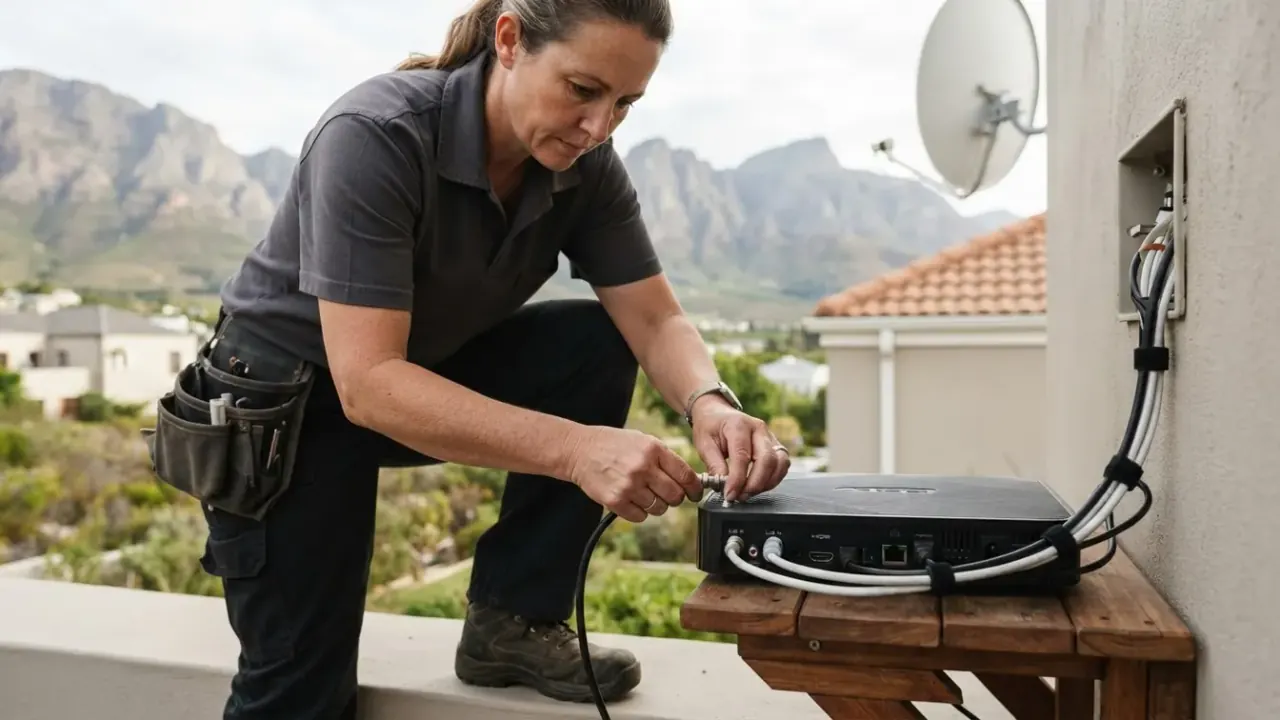
DStv Installation in Western Cape: close-up of a DStv installer's hands making a final connection of an F-connector to the
Observatory dispatch is ready

Book DStv Installation in Western Cape Today

Accredited technicians, SABS approved equipment, and a price quoted before we start. Same-day slots across the Cape and 24/7 emergency call-outs. Call HDTEK on 066 443 8385 and get your signal back.

Book Observatory service →24/7: 066 443 8385
Request Observatory service

Send the details. We'll handle the next step.

Tell us what you are seeing and where you are located. Our team will call to confirm the right appointment type and timing.

Observatory service hubObservatory, Western Cape066 443 8385Open 24 hours · 7 days a week
↗
Emergency?Call now