Site Survey and System Design
We inspect the building, confirm dish sightlines, plan cable routes and size the multiswitch to your unit count. You receive a written scope, a labelled layout and a fixed quote before any work is scheduled.
Our Communal DStv Installation Service in Western Cape gives body corporates, estates and apartment blocks one central satellite system feeding every unit. We handle the dish, headend, multiswitch and RG6 cabling, then commission each point so tenants get clean signal from day one. If your building still runs a tangle of individual dishes, a communal DStv system setup Western Cape style pays for itself in tidier roofs and fewer callouts.
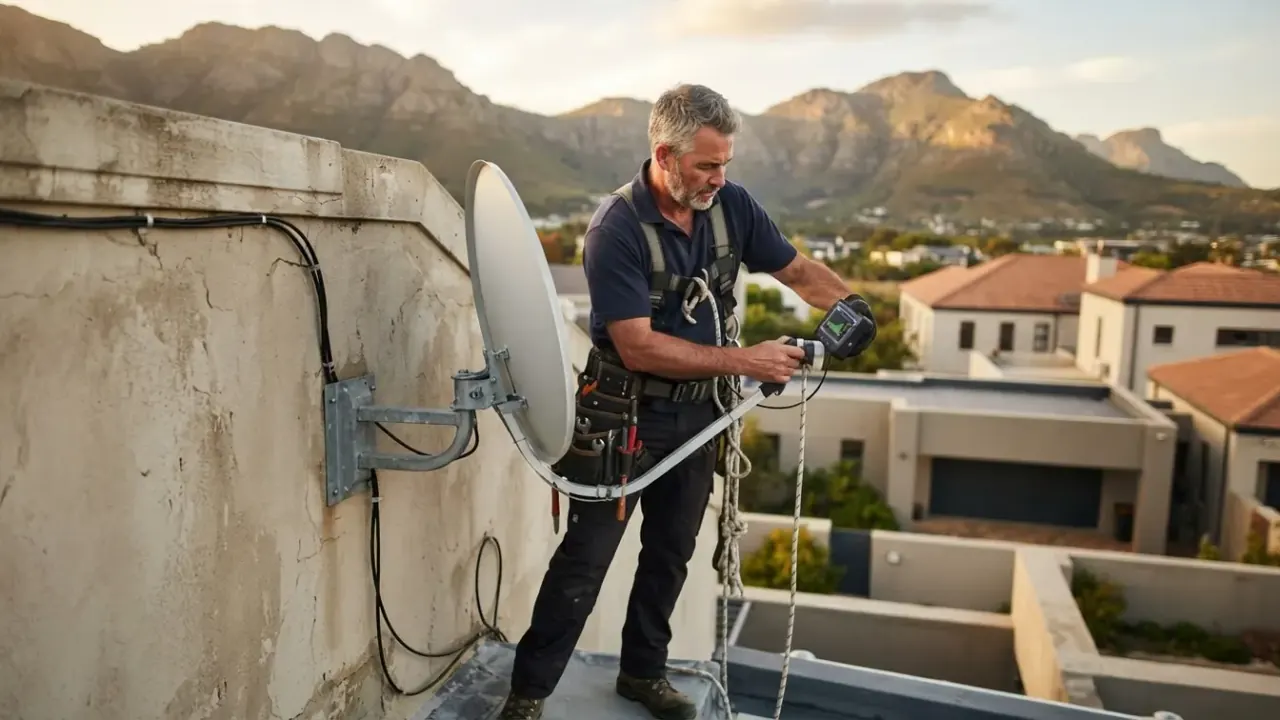
A Communal DStv Installation Service in Western Cape replaces the mess of individual dishes with one properly engineered headend. We mount a single satellite dish on a certified bracket, align it with a signal meter, then feed the LNB output into a multiswitch that splits signal to every unit through RG6 coaxial cable. Each apartment gets its own wall point and decoder feed, so one tenant's fault never knocks out the whole building. The whole job is measured, crimped and labelled before we hand over.
Most Western Cape complexes call us when the old system starts dropping channels in bad weather, when a new block is added, or when the body corporate finally tires of twenty dishes on one roof. Coastal salt air eats F-connectors and LNB housings, and that is where weak signal and E48-32 errors begin. We test every leg with a multimeter and signal meter, replace corroded fittings, and leave you with a system that holds up through a Cape winter.
Every communal installation we quote covers the full working system, not just the dish. Here is what is included as standard, so trustees know exactly what the body corporate is paying for before work begins.
We inspect the building, confirm dish sightlines, plan cable routes and size the multiswitch to your unit count. You receive a written scope, a labelled layout and a fixed quote before any work is scheduled.
Supply and fit of a SABS approved dish, LNB, multiswitch and headend cabinet on certified brackets. Alignment is done with a signal meter, compass and inclinometer so the system locks on cleanly and holds through weather.
RG6 coaxial cable pulled through sleeves or surface-mounted in trunking, terminated with new F-connectors and fitted with a wall point in each unit. Every run is clipped, labelled and documented for future maintenance.
Signal measured at every outlet with a signal meter and multimeter, decoder feeds confirmed, and any weak legs tuned or re-terminated. We do not hand over until each unit reads within spec.
You get labelled system diagrams, warranty terms and a support contact. We walk the trustee or managing agent through the headend so they know what to check if a tenant reports a problem.
We walk the building, check roof access, existing cable routes and where the headend can live. We note dish sightlines, load-bearing points and any waterproofing we must protect. You get a written scope and a fixed quote, usually within 48 hours of the visit.
We size the multiswitch to your unit count, map cable runs and confirm decoder points per unit. If the body corporate needs a resolution, we supply the technical detail trustees need to table it. Nothing gets drilled until the plan is signed off.
The dish goes up on a certified wall bracket, aligned with a compass, inclinometer and signal meter. We fit the LNB, run RG6 into the headend cabinet and terminate every F-connector with a crimping tool. This stage usually takes one working day on a mid-size block.
We pull RG6 through existing sleeves where possible, clip and label every run, and fit wall points in each unit. Cable clips, wall brackets and trunking keep the routes neat and serviceable. A 40-unit block typically takes two to four days depending on access.
We test every outlet with a signal meter and multimeter, confirm decoder pairing, and walk the trustee through the system. You get labelled diagrams, warranty terms and our number for support. Tenants switch on the same day we finish.
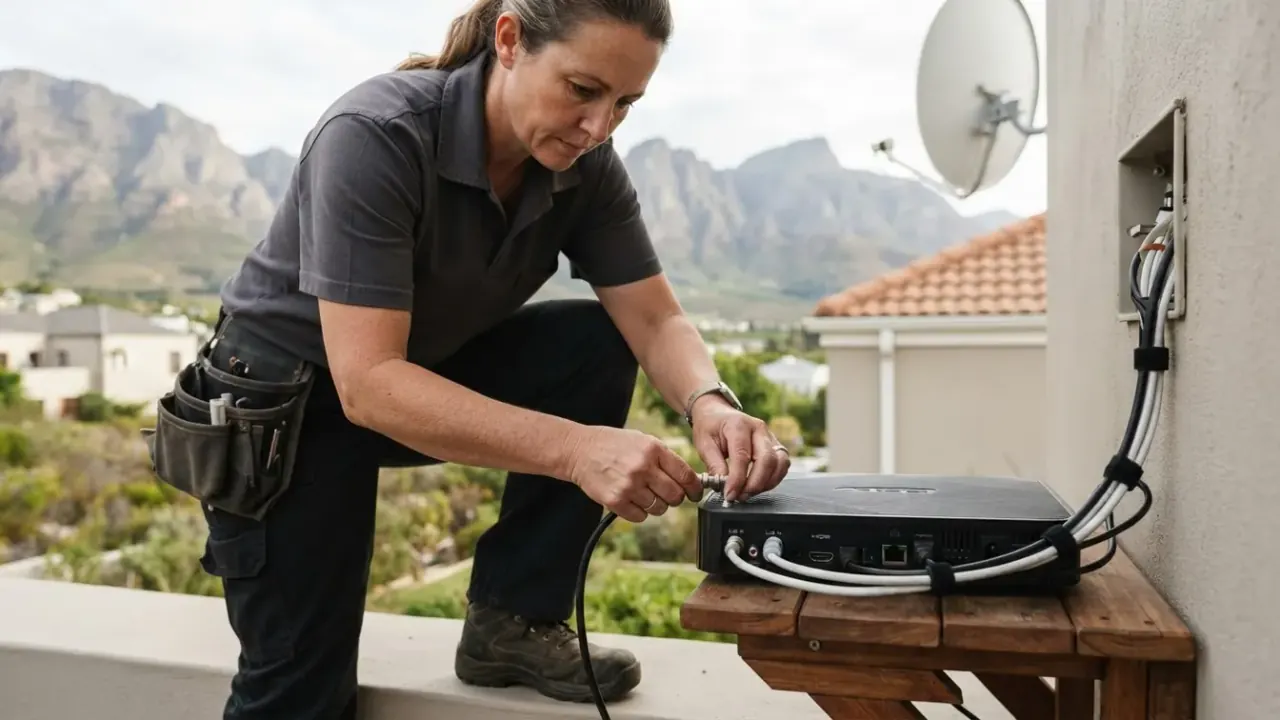
We walk the building, check roof access, existing cable routes and where the headend can live. We note dish sightlines, load-bearing points and any waterproofing we must protect. You get a written scope and a fixed quote, usually within 48 hours of the visit.
Used to lock the dish onto the satellite and to measure signal strength and quality at every outlet. It is how we prove each unit is within spec before handover.
Sets the dish azimuth and elevation precisely, so alignment is repeatable and the system holds through wind and seasonal shifts.
Produces clean, tight F-connectors on every RG6 run. Poor crimps are one of the biggest causes of signal loss and intermittent dropouts on shared systems.
Checks continuity, earthing and power at the headend and along cable runs, so electrical faults are ruled out before we blame the satellite side.
Required for safe roof and high-wall access. We do not send anyone onto a roof without the right fall protection, and we protect your waterproofing while we work.
Confirms HDMI links between decoder and TV are carrying signal cleanly, which matters when a tenant reports a picture problem that is not satellite-related.
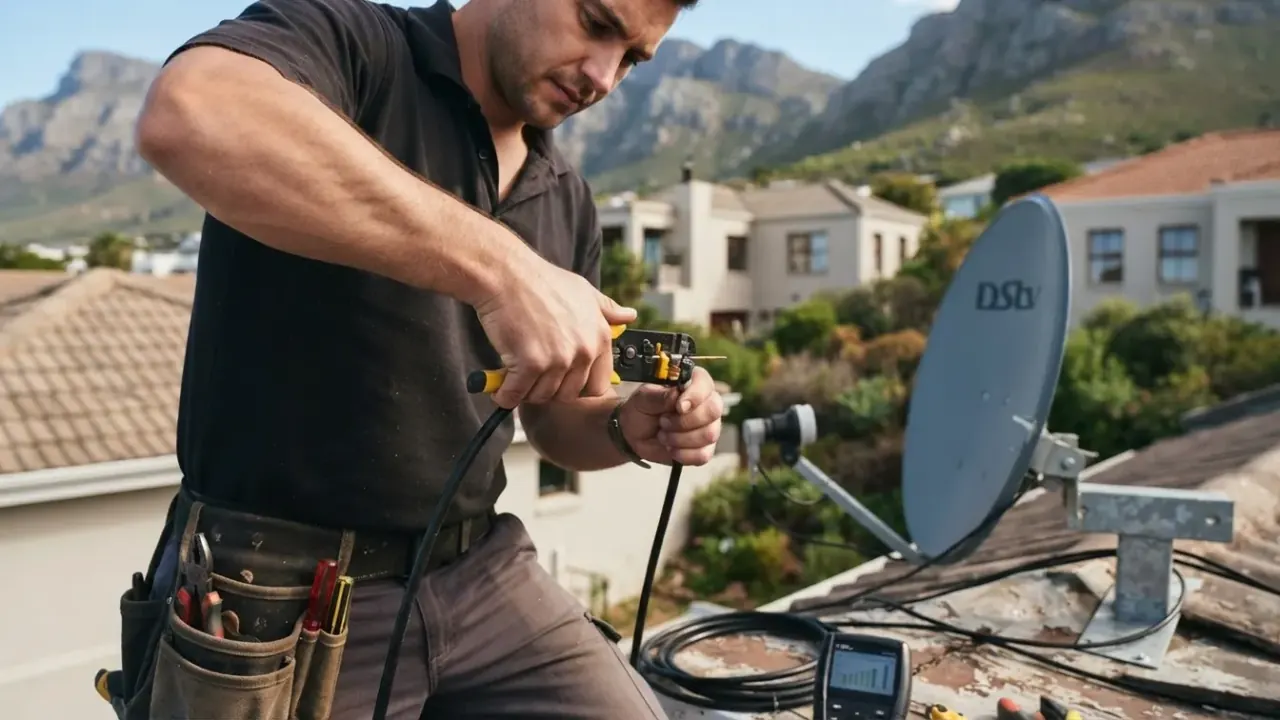
Thirty-four individual dishes on one roof, three failed LNBs, and tenants in lower units complaining about pixelation. No diagrams existed, and every fault took hours to trace because nothing was labelled.
After: One engineered headend feeding all 34 units, every outlet measured within spec, and a labelled diagram handed to the trustees. Signal complaints dropped to zero in the first six months after install.
Book this service →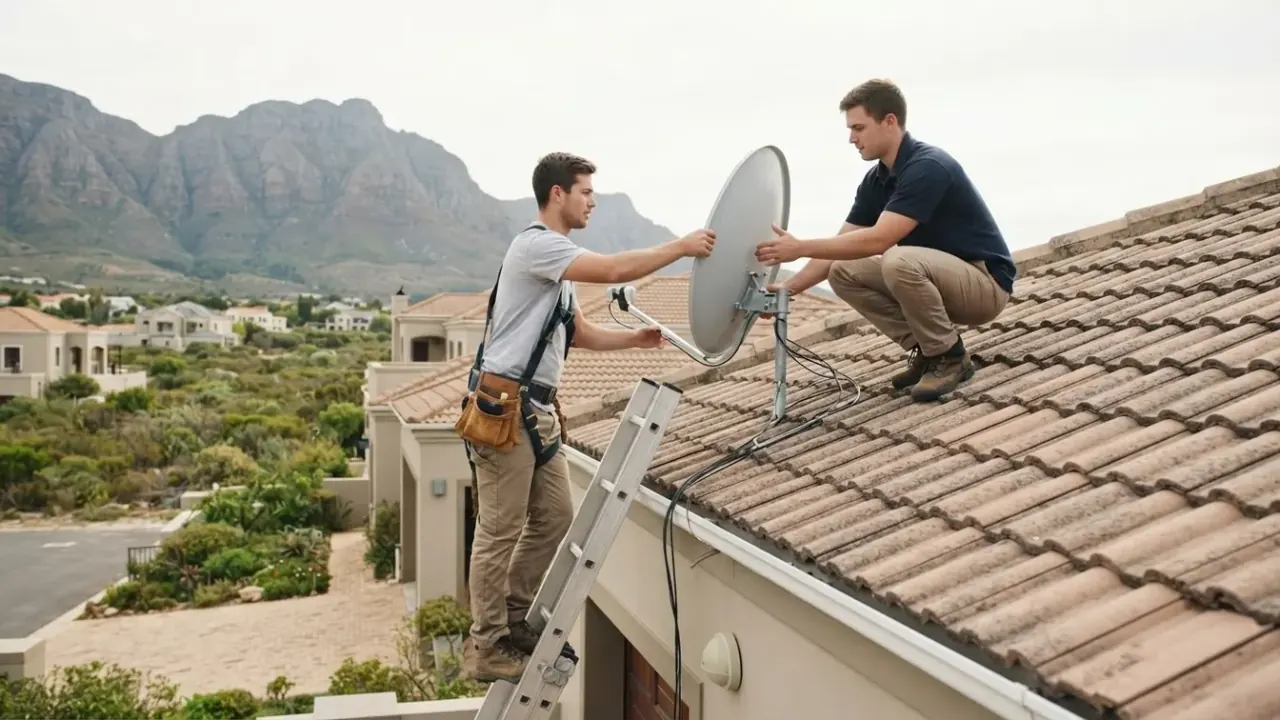
Salt air had corroded the LNB and most F-connectors, causing intermittent dropouts across the building. Tenants were replacing decoders that were not actually faulty.
After: New sealed LNB, re-crimped RG6 terminations throughout, and a re-aligned dish. Every unit tested clean, and the body corporate stopped paying for unnecessary decoder swaps.
Book this service →A new estate needed satellite infrastructure for 22 homes before tenants moved in. Cable routes were still open, but no design existed and the developer needed a fixed number for the budget.
After: Two headends sized to the estate layout, RG6 pulled before walls closed, and every home commissioned before handover. Tenants switched on the day they moved in.
Book this service →Shared satellite systems fail in predictable ways. These are the faults we are called out to fix most often, and how we stop them coming back.
Ask a pro →We inspect the dish alignment, LNB and headend earthing, then re-align and re-terminate where salt corrosion or wind movement has shifted the signal path. A properly braced dish and sealed connectors hold through a Cape winter.
We measure every leg, balance the multiswitch and replace undersized or damaged cable runs. Signal is tuned so the weakest outlet matches the strongest, and we document the readings at handover.
We trace the fault to its real source, whether that is an LNB failure, a headend splitter or a damaged cable. Once the signal path is clean, the errors clear and the existing decoders work again.
We survey the existing headend, test its capacity, and either extend it with additional multiswitches or rebuild it to serve the new unit count. Everything is re-labelled so the next technician can pick it up.
“We had 34 units on a mess of old dishes and constant complaints. HDTEK surveyed, quoted fixed, and installed a single headend in three days. Every unit tested clean, and the roof finally looks like a roof again. Six months on, not one signal complaint.”
Riaan M.Trustee, Century City
✓ Verified“Salt air had destroyed the old LNB and half the F-connectors in our Sea Point block. Their team replaced the headend, re-crimped every joint and labelled the whole system. Fault-finding is now a ten-minute job instead of a two-hour hunt.”
Fatima D.Managing Agent, Atlantic Seaboard
✓ Verified“We added a second dwelling on our property and needed both units on one system. HDTEK designed a small communal setup with a shared dish and separate decoder points. Clean install, tidy cabling, and the signal is perfect in both houses even in heavy rain.”
Johan V.Homeowner, Stellenbosch
✓ VerifiedTypical 2026 pricing runs from around R18,000 for a small 8 to 12 unit block to R120,000 or more for a large estate with multiple headends. Cost depends on unit count, cable distance, roof access and whether existing sleeves can be reused. We quote fixed, itemised pricing after a site survey, so trustees see exactly what each stage costs before approving.
A single well-designed headend can serve 100 or more units by cascading multiswitches and amplifiers. In practice we size the system to your building: most Cape Town apartment blocks run 20 to 60 units on one headend, while larger estates use two or three satellite headends feeding separate sections. Signal is measured at every outlet so no unit is left weak.
We do, across the whole province. Our teams cover the Atlantic Seaboard, Southern Suburbs, Northern Suburbs, Helderberg, Winelands and the Overberg, including Hermanus, Stellenbosch and Somerset West. Call 066 443 8385 and we will book a site survey, usually within a few working days depending on your area.
Yes. Anything fixed to common property, including the dish, headend cabinet and shared cable routes, needs a trustees' resolution. We provide the technical detail and diagrams your body corporate needs to table the motion, and we can attend the meeting if trustees have questions. Once approved, we schedule the install around your building's access rules.
Our teams deliver communal DStv system setup Western Cape wide, covering the Atlantic Seaboard, Southern and Northern Suburbs, Helderberg, Winelands and Overberg. Whether your building sits in a dense city block or a coastal estate, we survey, quote and install with the same standard. Below are some of the areas we serve most often.
High-rise blocks with salt exposure and shared roof space. We install sealed headends and marine-grade brackets, and coordinate access around building rules and tenant schedules.
↗ 02 Betty's BayCoastal Overberg homes and small complexes where wind exposure is severe. We brace dishes heavily and test every outlet before the holiday season when occupancy peaks.
↗ 03 Boschenmeer Golf EstateEstate homes needing consistent DStv across multiple properties. We design headends sized to the estate layout and hand over labelled diagrams to the HOA.
↗ 04 Century CityDense apartment towers with existing cable sleeves and strict access windows. We work floor by floor and typically complete a 40-unit block in three to four days.
↗ 05 ClovellyCoastal Southern Peninsula properties where salt air attacks connectors. We specify sealed F-connectors and stainless brackets, and schedule annual headend inspections.
↗ 06 DassenbergInland West Coast properties with long cable runs and wind exposure. We plan routes early and use amplifiers where distance pushes signal loss.
↗ 07 Devil's Peak EstateCity Bowl homes with heritage considerations and tight roof access. We plan discreet dish placement and route cable to protect facades and waterproofing.
↗ 08 DreyersdalSouthern Suburbs residential blocks where older cabling is common. We audit existing runs, replace failed connectors, and balance signal across every unit.
↗ 09 FaureWinelands and rural properties where distances between buildings are long. We design multi-headend systems and test each leg to confirm signal strength.
↗ 10 GlencairnCoastal village homes exposed to south-easter winds. We use certified brackets and UV-stable clips so dishes and cable hold through the storm season.
↗ 11 Hermanus HeightsOverberg coastal buildings with seasonal occupancy and salt exposure. We rebuild corroded headends and commission every outlet before peak holiday letting.
↗ 12 JonkershoekStellenbosch valley estates with heritage rules and long cable runs. We plan routes carefully and use amplifiers where distances push signal loss.
↗ 13 Kingswood Golf EstateEstate homes needing tidy, consistent satellite infrastructure. We install shared headends on common property and hand over full documentation to the HOA.
↗ 14 KylemoreWinelands properties where buildings are spread out and access varies. We survey thoroughly, quote fixed, and stage the install to suit the property's schedule.
↗ 15 LakesideSouthern Peninsula homes near the vlei where damp and salt affect connectors. We seal every joint and test signal at each outlet before handover.
↗One call gets a site survey booked and a fixed quote in your inbox. We work with trustees, managing agents and owners, and we keep the building running while we install. Call 066 443 8385 today.
Book a Site Survey 066 443 8385 →Call or WhatsApp 066 443 8385 and tell us the suburb, the error code and how many TVs you need. We answer seven days a week from 08:00, with 24/7 emergency call-outs for signal loss. Most Western Cape jobs are booked same-day or next-day, and you get a price before we dispatch a van.